



A long-buried Roman complex discovered near the Limmat River is changing how historians understand Roman influence in northern Switzerland. What was once believed to be a trade and storage area now appears to have served administrative and political functions, according to findings from a rescue excavation led by the Cantonal Archaeology Department.
Excavations conducted between April 2024 and May 2025 revealed the remains of a planned settlement that was never fully completed. The site sits near the riverbank in Gebenstorf, not far from the Roman legion base at Vindonissa.
Researchers identified more than 4,000 structural features, along with hundreds of building plans and thousands of photographs. A total of 1,665 artifacts were cataloged in the cantonal database, including 137 Roman coins and several objects linked to commerce and administration, such as styluses, weights, and a folding ruler.
Architecture reveals multifunctional Roman center
The layout of the Roman complex included three main buildings likely constructed in the late first century CE by members of the 11th Legion. These structures lined the riverbank and reflect a design rarely seen this far north.
One building appears to have been a double-aisled portico with columned walkways. Another features a partially subterranean hall, similar to those found in Roman forums.

The third, more complex structure included multiple rooms, corridors, and internal courtyards. Part of it likely extends beneath a modern road.
Tobias Kappeler of the Cantonal Archaeology Department explained that the configuration suggests a multifunctional center meant to manage trade, legal affairs, and governance. The overall scale and design point to an intended urban development that was never brought to completion for reasons still unknown.
Rare amphora offers clues about Roman diet
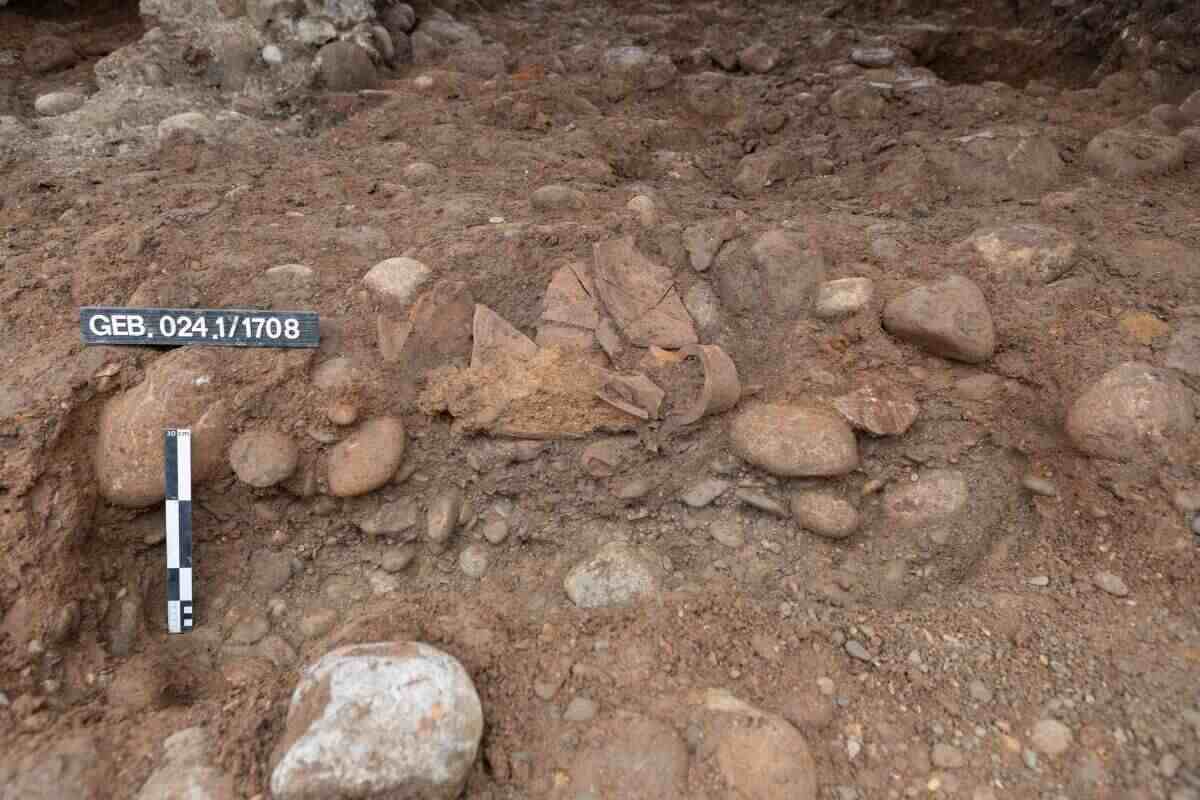
Among the standout discoveries was a fully intact amphora, the only complete vessel found among thousands of pottery fragments. Excavators removed it with its sediment preserved in a soil block. Specialists at the University of Basel later examined the contents using fine sieves.
They identified fish bones and scales from Sardina pilchardus, or Atlantic sardine, confirming that fish sauce was imported into the region. The small size of the fish suggests they were young, providing the first direct evidence of sardine consumption in Roman Switzerland.
Clay analysis of the amphora indicates it was likely produced between 25 and 50 CE in coastal Baetica, present-day Andalusia, although Roman Gaul remains a possible origin.
See all the latest news from Greece and the world at Greekreporter.com. Contact our newsroom to report an update or send your story, photos and videos. Follow GR on Google News and subscribe here to our daily email!

