



Nimrod, recognized as the inaugural biblical monarch following the floods, has long captivated the interest of historians and biblical scholars with his enigmatic origins and storied past.
He is mentioned in the Bible primarily as the first king after the Genesis 10:8-10 flood. “Cush was the father of Nimrod; he was the first on earth to become a mighty warrior. He was a mighty hunter before the Lord; therefore it is said, ‘Like Nimrod a mighty hunter before the Lord.’ The beginning of his kingdom was Babel, Erech, and Accad, all of them in the land of Shinar.”
Micah and 1 Chronicles mention him about his land and strength. The Roman-Jewish historian Josephus expanded on biblical references to Nimrod, describing him as a powerful leader who turned people away from God. He speculated that Nimrod instigated the construction of the Tower of Babel as an act of defiance during his reign.
His rule became increasingly tyrannical, as he discovered that the best way to turn people away from the fear of God was to make them fear him instead. The Talmud, the primary source of Jewish theology and law outside the Torah, shares Josephus’ view.
Historians over the millennia have theorized about the identity and reign of the warrior king Nimrod. However, a few kings in known ancient texts fit the brief, and albeit very general description given in Genesis.
Potential Nimrods, the first kings
A couple of candidates fit the brief description in Genesis and could have been the great first king on Earth after Noah’s floods
Sargon of Akkad

Sargon of Akkad arguably has the strongest case historians have for being Nimrod. According to Genesis, Nimrod was from the line of Cush, was a mighty man, a hunter, began in Shinar (Sumer), and conquered Assyria and all that was within it.
Sargon of Akkad was not exactly from the land of Cush. But he likely descended from Cush and was born in Kish, given the flexibility of Old Testament genealogy. He was also a mighty man, a hunter, and a powerful ruler. Rulers of this era, particularly of Mycenae and Egypt, are frequently described as exemplary hunters.
Historians suggest that Sargon was probably not his birth name, but a title adopted upon becoming king.
“His real name is unknown: Sarru-Kin, meaning ‘the true king’ in Akkadian, is obviously a throne name,” said historian Yagil Levin.
It could have been that Nimrod was his birth name, and he assumed the name of Sargon when he became king. Lastly, he began his conquering of the land of Sumer, and took over Assyria and its cities, lining up perfectly with biblical context.
Gilgamesh
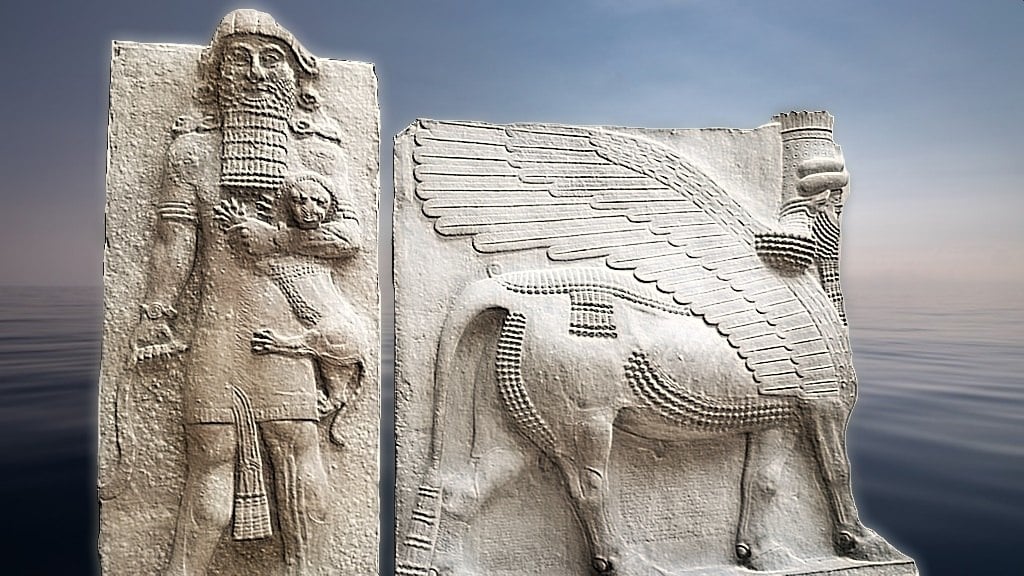
The Epic of Gilgamesh’s titular hero, the ancient Uruk king is a likely candidate to be the biblical king Nimrod. According to the book of Genesis, Nimrod ruled over the city referred to as Eruch, directly translated as Uruk. Gilgamesh is also depicted as a mighty warrior and hunter. He killed many beasts, conquered the wilderness, and tamed them, making them cities. This lines up with the city-builder aspect of Nimrod.
The Epic of Gilgamesh says, “Where is the strength? It is Gilgamesh. Who will venture first into the Cedar Forest, and you can follow after, crying out: “Go on, go forward, go on, embrace the danger!”
The quote from the Epic of Gilgamesh lines up with the perception of the Talmud and Josephus. Earth’s first king rebelled against God, akin to Gilgamesh’s defiance in the Epic of Gilgamesh and similar to Nimrod. Also, Gilgamesh rebels against the divine order by seeking immortality. While this isn’t in direct rebellion with God like Nimrod, it is in the same vein.
The challenge of Gilgamesh’s candidacy to be the biblical first king lies in the ancient texts’ differing theologies describing the figures and the potential timeline discrepancies. Gilgamesh’s epic predates Nimrod’s genealogy by centuries and describes his rebellion against a pantheon, not a single deity.
See all the latest news from Greece and the world at Greekreporter.com. Contact our newsroom to report an update or send your story, photos and videos. Follow GR on Google News and subscribe here to our daily email!

