



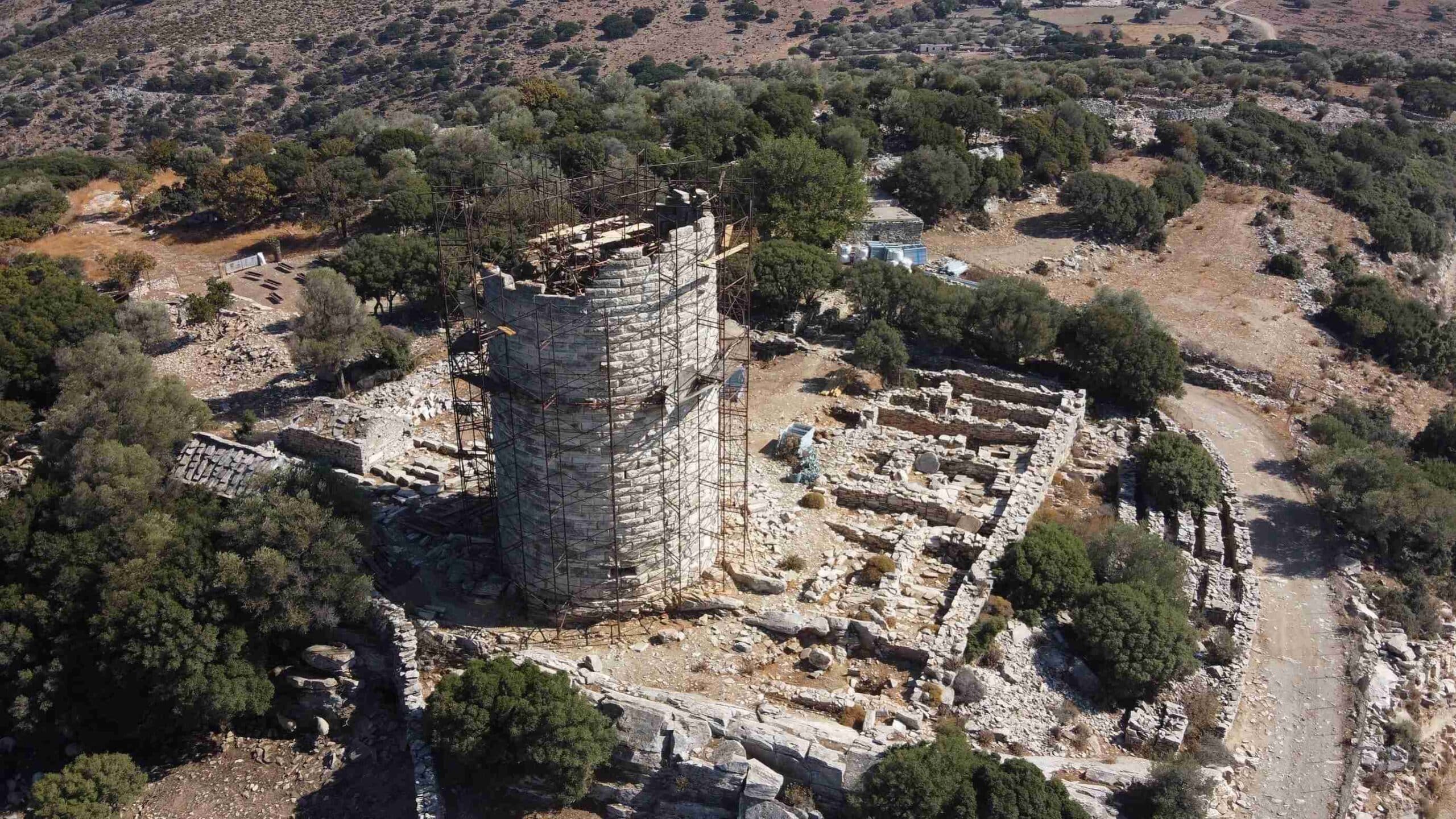
Archaeologists have uncovered previously hidden structures around a 2,300-year-old tower on the island of Paros (Greek: Πάρος), Greece. The research used non-invasive methods to reveal hidden structures and agricultural traces near the Palaiopyrgos tower, offering new insights into how ancient rural communities lived and worked.
The findings were published in the Journal of Archaeological Science: Reports by lead author Emlyn Dodd.
Advanced survey reveals hidden remains
Researchers used magnetometry to scan three hectares of farmland around the circular Palaiopyrgos tower (Greek: Παλαιόπυργος), which dates to the late Classical or early Hellenistic period.
The survey detected anomalies suggesting walls, courtyards, and possible ancillary rooms clustered near the tower. These discoveries indicate that the tower was not an isolated structure, but part of a larger complex, potentially linked to farming and storage activities.
Dodd noted that this is the first time such techniques have been applied to Paros. The results prove the value of using non-invasive methods on Cycladic (Greek: Κυκλάδες) islands, where development threatens to erase traces of the past before they can be studied.
A tower at the center of rural life
The Palaiopyrgos tower lies a short distance from Naousa Bay in northern Paros. Built with double-walled limestone blocks, the tower has long puzzled archaeologists. Surface pottery suggested use from the Archaic through Byzantine periods, but little was known about its surrounding landscape.
Material collected during the survey sheds light on its role in the rural economy. Sherds of large storage jars, Roman amphorae, and press counterweights point to the production of wine or olive oil for export. Such evidence suggests the tower served as a hub for agricultural processing and defense.
The tower’s design and location also connect it to trade routes across the Cyclades, where fortified rural sites guarded resources and coordinated farming. Similar towers on Naxos (Greek: Νάξος) and Amorgos (Greek: Αμοργός) had courtyards, presses, and storage rooms. The new results suggest Palaiopyrgos may have functioned similarly.
Pressures from modern development
The survey also exposed the risks facing heritage on Paros. Expanding tourism has spurred a surge in new construction, with short-term rentals encroaching on archaeological zones. Hidden features such as walls and farm systems lie directly in areas where development is now spreading.
Dodd and his team emphasized that fast, low-cost surveys, such as magnetometry, provide essential protection. They can guide authorities before rescue excavations or construction begins, allowing cultural heritage to be recorded and preserved.
The results show that Paros’ rural landscapes hold far more history than what is visible today, Dodd explained. These methods give us a way to document and safeguard them in the face of rapid change.
A model for future Cycladic research
While magnetometry identified several promising anomalies, excavation is still needed to confirm their nature. A test trench dug near the tower already revealed an external wall built in a style matching the main structure, supporting the idea of a courtyard complex.
The researchers argue that future studies should combine magnetometry with ground-penetrating radar for even sharper results. Targeted excavations at the key anomaly sites could clarify how the tower evolved, how long it remained in use, and how its functions shifted over centuries.
Beyond Paros, the study demonstrates the potential of applying geophysical prospection across the Cyclades, where hidden agricultural systems remain poorly understood. Documenting them now, the authors said, is vital before development pressures permanently erase them.
See all the latest news from Greece and the world at Greekreporter.com. Contact our newsroom to report an update or send your story, photos and videos. Follow GR on Google News and subscribe here to our daily email!

