



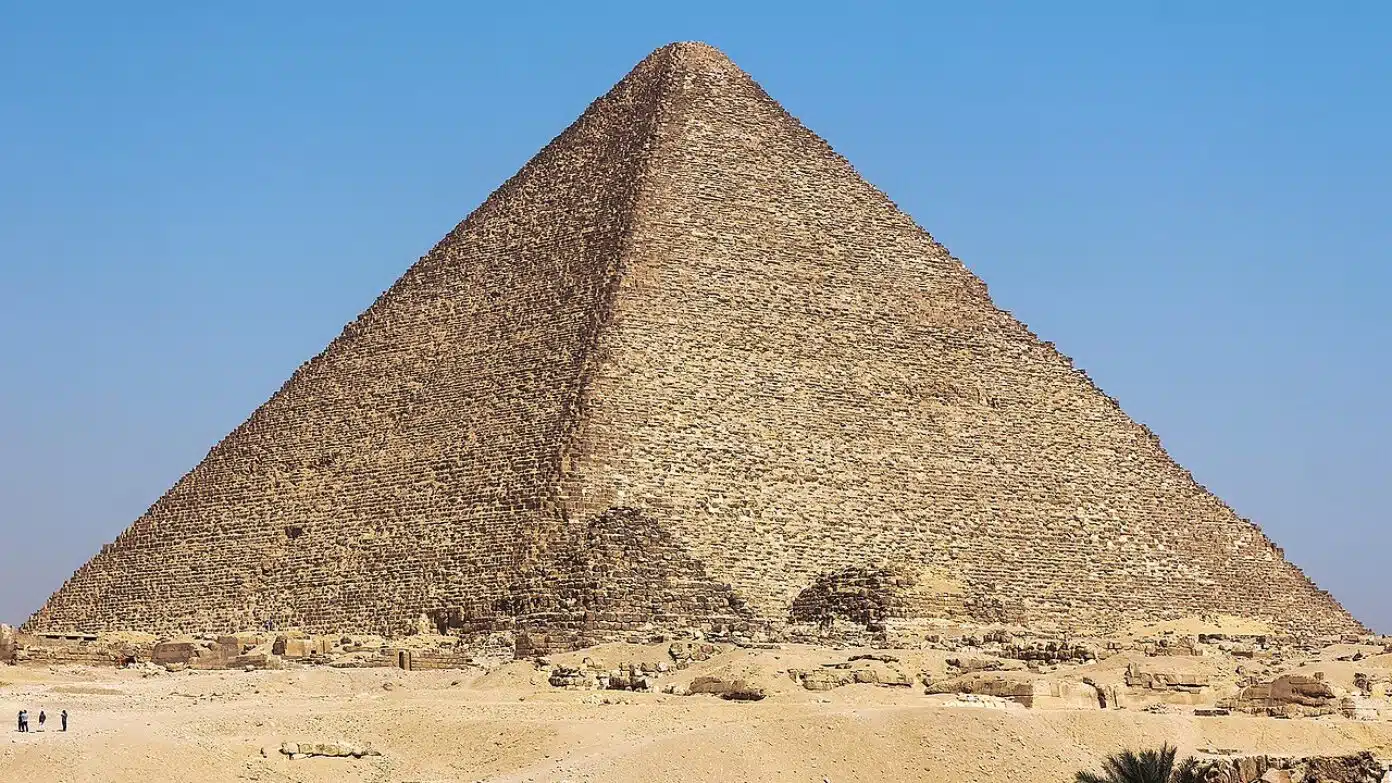
New archaeological findings from a study led by renowned Egyptologist Dr. Zahi Hawass is challenging the long-standing belief that slaves built the pyramids in Egypt.
Inscriptions discovered above the King’s Chamber in the Pyramid of Khufu include red-painted markings with the names of work teams and details of their shifts, supporting earlier documents found at Wadi el-Jarf that describe stone deliveries to the pyramid site.
Together, the evidence leads them to believe that the builders were organized laborers working in rotating crews, not enslaved individuals.
Hawass shares exclusive images in the podcast interview
Dr. Hawass discussed the discovery in a June 6 interview on the Matt Beall Limitless podcast. He revealed never-before-seen images from deep within the pyramid, showing the hand-written names on stone.
“It’s almost impossible that someone in modern times could have forged something like this,” he said. The chamber lies 14 meters above the ground and can only be reached by crawling through narrow spaces.”
New camera explores the mysterious void inside the pyramid
As part of the same investigation, researchers inserted a camera into the “Big Void,” a 30-meter space first detected in 2017 using particle imaging. It was the first attempt to view inside the mysterious cavity.
Archaeology breakthrough as ancient inscriptions 'confirm' who built Egypt's Great Pyramid.
However, a recent expedition by a team of archeologists including Egyptologist Dr Zahi Hawass has concluded it was not the work of slaves but instead of paid workmen. Using 3D… pic.twitter.com/F2HKXld74b
— Global𝕏 (@GlobaltrekX) July 3, 2025
Although lab tests are ongoing, Hawass said the initial footage showed nothing unusual—only typical stonework markings.
Burial sites and remains of food support the paid labor theory
Excavations around the pyramid have also uncovered graves belonging to workers believed to have participated in the construction. The burial sites lie just south of the monument and include statues, tools, and inscriptions listing over 20 job titles such as “artisan” and “overseer of the side of the pyramid.”
Animal bones found nearby—11 cows and 33 goats—suggest that the workers were well-fed. Hawass said this diet could have supported 10,000 people daily.
Discovery of a village points to a permanent workforce
Evidence of a nearby village adds further weight to the claim that the workers were respected members of a large, organized workforce. Excavations revealed housing, bakeries, medical facilities, dormitories, and food processing centers, indicating a permanent settlement.
Archaeologists also found remains of a mud-and-rubble ramp on the southwestern side of the pyramid. It connected to a quarry just 300 meters away, offering a practical system for transporting the massive limestone blocks used in construction.
New findings challenge decades-old popular belief
Researchers believe the crews worked under strict schedules, often receiving just one day off every 10 days. Although the conditions were difficult, the workers appear to have been trained laborers, not coerced individuals.
For decades, popular culture has portrayed slaves toiling under the harsh sun, pulling giant stones while overseers shouted from behind. But new evidence now paints a very different picture—one of skilled teams, detailed planning, and national pride in building one of the world’s greatest monuments.
See all the latest news from Greece and the world at Greekreporter.com. Contact our newsroom to report an update or send your story, photos and videos. Follow GR on Google News and subscribe here to our daily email!

