



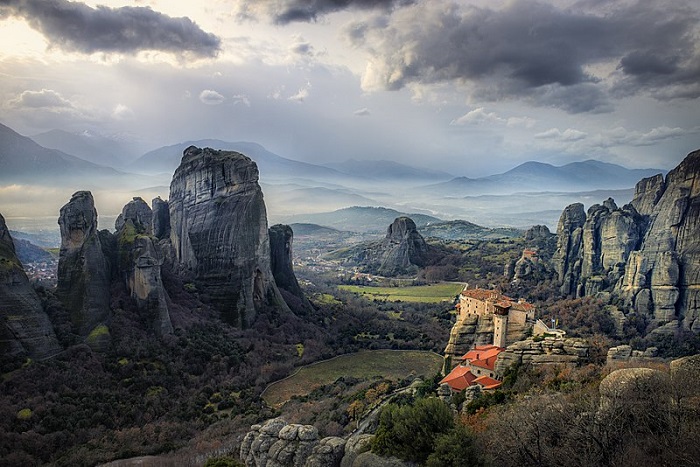
Meteora, Greece’s stalagmite-like hanging rocks that reach into the sky amid a backdrop of craggy mountains and red-roofed monasteries, has become the second most popular destination in mainland Greece, with authorities now planning further tourist development in the region.
About 2.5 million people visit Meteora each year, mostly from the United States, Europe, China, South Korea, Japan and the Balkans. Before the war in Ukraine many Russians were visiting as well due to the area’s religious importance, which is second only to Mount Athos regarding religious centers of Orthodox monasticism.
Meteora, which in Greek means “suspending in the air,” is one of the 18 Greek monuments that have been listed by UNESCO in the World Cultural Heritage list and a paradise for the lovers of nature and spiritual journeys.
SkyParkSecure, UK’s leading airport parking providers, lists Meteora as one of the leading alternative tourism destinations in Europe for 2025. According to SkyParkSecure, Meteora offer to visitors unreal natural surroundings and ancient monasteries sitting atop massive rocks, making the area “an exciting, alternative solution to Cappadocia,” Turkey’s famous region with tall, cone-shaped rock formations.
Seeing the rise in the number of tourists visiting the region, the municipality of Meteora is signing a Memorandum of Understanding with the Ministry of Tourism in order to promote Meteora as a model tourist destination. Meteora is one of ten municipalities across Greece selected to be funded for the project, which according to local authorities, aims to ensure sustainable tourist development, enhancing the quality and competitiveness of the region’s tourism product.
The unique beauty and history of Meteora before becoming a popular tourist destination
Meteora’s immense, solid rocks, split by earthquakes, weathered by water and wind over millions of years, are nature’s authentic masterpiece.
Emerging about 25 million years ago as the elevated seabed material that was the outcome of massive tectonic movements, the Meteora rocks became a shelter for humankind.
The first Christian hermits arrived in this area to seek spiritual isolation and inhabited the caves of the rocks, with the sole aid of ropes and ladders, in the early medieval period.
They sought out Meteora as the perfect spot to remove themselves from society and experience the wonder of God’s creation.
Common existential needs and strong religious faith compelled them to live united in the first monastic communities, their common drive of faith guiding them towards the construction of monasteries of highest architectural and artistic value.
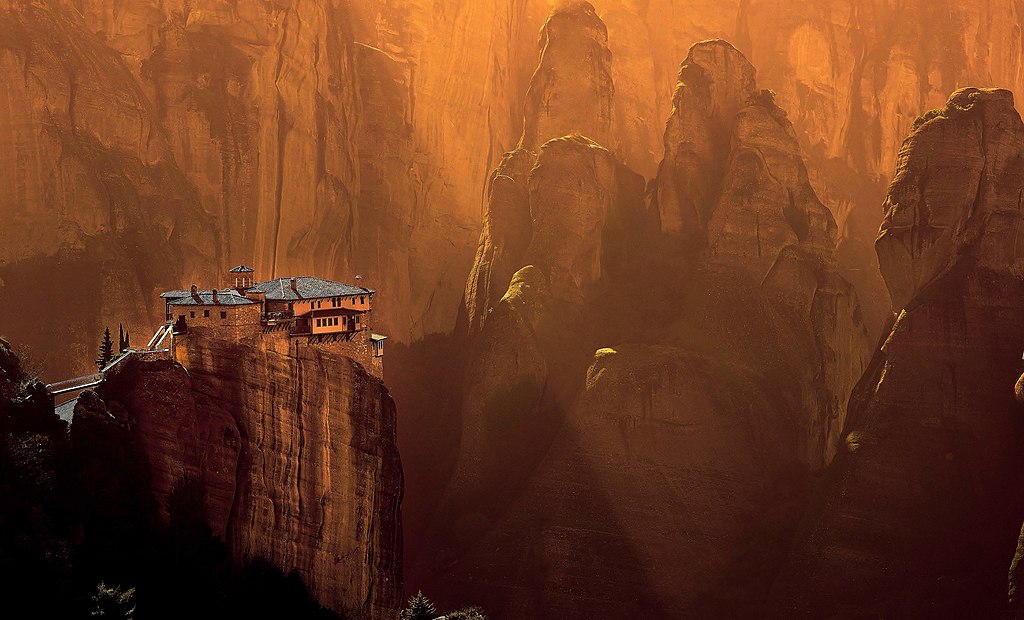
The 24 monasteries emerged on the summits of the rocks from the 14th until the 16th century, with six of them remaining to be explored and admired by all.
These monasteries became the centers of the Orthodox world in the Byzantine era, having produced some of the best pieces of religious art and craft — and still possessing a collection of precious manuscripts, which today are on display in their museums.
Access to the monasteries was originally (and deliberately) difficult, requiring either long ladders latched together or large nets used to haul up both goods and people.
Until the seventeenth century, the primary means of conveying goods and people from these eyries was by these means of baskets and ropes.
In the 1920s there was an improvement in the arrangements. Steps were cut into the rock, making the complex accessible via a bridge from the nearby plateau.
See all the latest news from Greece and the world at Greekreporter.com. Contact our newsroom to report an update or send your story, photos and videos. Follow GR on Google News and subscribe here to our daily email!

