



The final countdown to the opening of the Thessaloniki metro has begun as the main line of the city’s fixed-track transport will be delivered on Saturday, November 30.
Thessaloniki will eventually have a metro a full 18 years after the signing of the basic contract for the project, on April 26, 2006.
On Friday PM Kyriakos Mitsotakis will board a train alongside European and Greek officials for the inaugural journey, traveling from Nea Elvetia to the New Railway Station and back. Along the way, the dignitaries will make brief stops to visit the metro’s 13 stations, each with its own unique story.
Also on Friday, Culture Minister Lina Mendoni will lead a special ceremony and tour of the much-discussed Venizelos station, renowned for its challenges in preserving ancient artifacts unearthed during construction.

The country’s second Metro system—after Athens—will begin operations immediately after the opening ceremony, scheduled for 12 noon on Saturday. Once the metro officially begins operation, the remarkable Roman and Byzantine discoveries will be on display for tens of thousands of passengers daily.
The Minister of Infrastructure and Transport, Christos Staikouras, said the first day of operation will be free for passengers.
The city’s public transport will be reorganized, transitioning from a one-dimensional urban transport system reliant solely on buses, to a dual system with buses and the metro.
The main metro line will have 18 trains without drivers (there will be an attendant for safety). Its maximum carrying capacity will be 18,000 people per hour in each direction, for a total of 254,000 passengers, which is expected to increase to 350,000 with the addition of 15 more trains.

Residents of Thessaloniki have anticipated the completion and operation of the metro system in the city for many years, as heavy road traffic is a persistent issue in the daily life of Greece’s second most crowded city.
Thessaloniki Metro and the archaeological finds displayed
The 3.5-billion-euro project was originally expected to open to the public by 2012. Construction began almost two decades ago in 2006, but progress was delayed due to a series of important archaeological discoveries in the metro tunnels.

Antiquities that were previously relocated during excavations of the Thessaloniki Metro will be displayed at the Venizelos Station.
The antiquities were discovered during the second round of excavations inside the shell of the Venizelos Station in Thessaloniki.
The archaeological discoveries included both constructional finds and moveable antiquities.
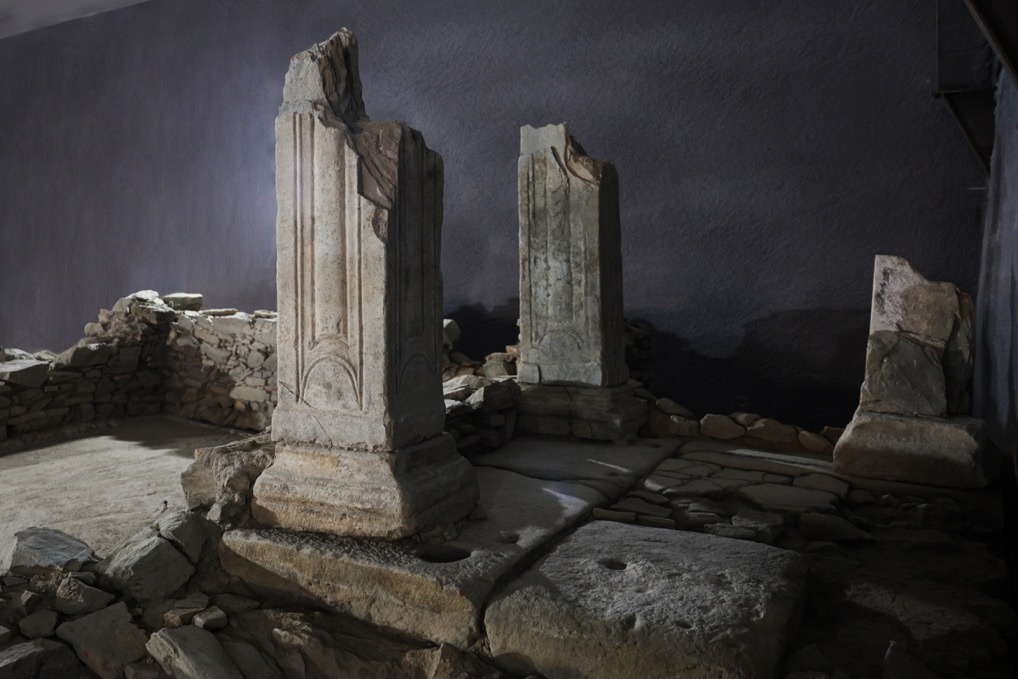
A network of ancient infrastructure and several buildings were found at the site of excavation. Some of these were discovered under the old Roman east–west-oriented Decumanus road and under the present-day Venizelou Street.
Most of the finds belonged to the late Roman and early Byzantine periods between the 3rd and 6th centuries AD. A large number of coins were discovered, together with many items of pottery, as well as glass, iron, bronze, marble, and bones.

The project is primarily funded with loans from the European Investment Bank (EIB) and the European Regional Development Fund (ERDF), and funds from the Greek government.
The Thessaloniki metro system will extend 9.6 kilometers (six miles) and eventually serve 18 stations. Currently, 13 are ready.

Related: 300,000 Ancient Artifacts Found During Thessaloniki Metro Works
See all the latest news from Greece and the world at Greekreporter.com. Contact our newsroom to report an update or send your story, photos and videos. Follow GR on Google News and subscribe here to our daily email!

