



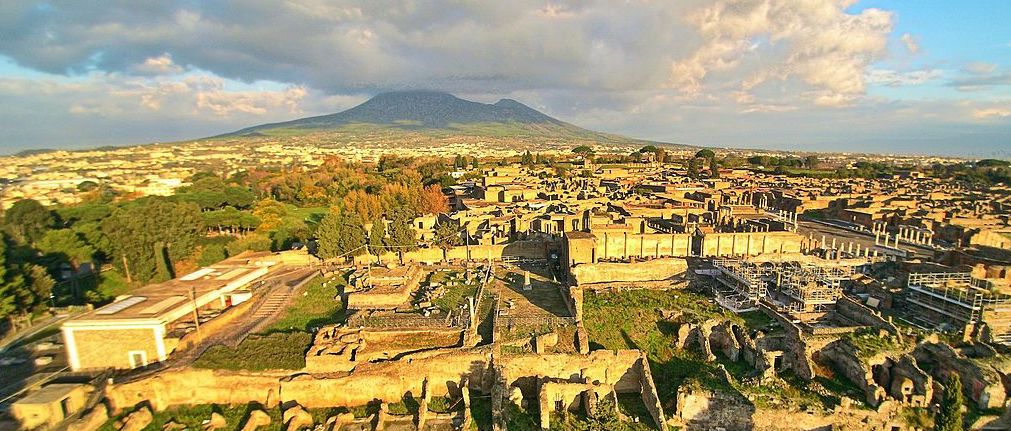
Researchers are using advanced technology to uncover how ancient Romans experienced their homes. A virtual reality Pompeii house reconstruction has revealed new insights into how architecture, light, and movement shaped daily life.
Roman homes were known for their open spaces and carefully planned sightlines. The importance of unobstructed views was so significant that Roman law protected the “right to a clear view.”
Straight lines and luxurious details
Roman villas typically followed a layout of straight, clear lines, allowing people to see through the entire house. Builders also tailored designs to fit how residents and visitors moved within the space.
For example, areas visible from the entrance were often decorated with simple, eye-catching designs. In contrast, rooms meant for guests featured elaborate decorations, like sculptures and fountains, creating a more luxurious and welcoming atmosphere.
A new approach to understanding Roman architecture
While many experts have analyzed these design elements using sketches and models, a recent study published in the American Journal of Archaeology offers a fresh perspective.
The study, titled “Visual Experience in a Pompeian Domestic Space: Analysis Using Virtual Reality-Based Eye Tracking and GIS,” explores how ancient Romans might have experienced their homes in real time. By examining factors like movement, focus, and light, the study provides new insights into Roman architecture.
Virtual Reality brings ancient spaces to life
The researchers, Danilo Marco Campanaro and Giacomo Landeschi focused on the House of the Greek Epigrams, a site in the ancient ruins of Pompeii. Using 3D virtual reality technology, they recreated the house and observed how five participants moved through it.
The House of the Greek Epigrams was an impressive home in northeast Pompeii once decorated with lavish frescoes. It was destroyed in the eruption of Vesuvius in AD 79. The researchers modelled it, complete with restored paintings, in VR.
📷: Mentnafunangann / CC BY-SA 3.0 pic.twitter.com/xrVw7mxJYR
— 🅰ntiquity Journal (@AntiquityJ) June 14, 2023
Their movements, gaze, and areas of visual focus were recorded and analyzed using geographic information system (GIS) technology. This approach allowed the researchers to study how people interacted with the space in ways traditional methods could not.
The role of light in visual experiences
The study also tested the virtual model under two lighting conditions: early morning during the winter solstice and midday during the summer solstice. These conditions revealed how light affected what participants noticed and how they experienced the house.
For example, paintings appeared differently depending on the time of day, influencing how long participants viewed them and how well they could see the details.
The interiors of the House of the Greek Epigrams are adorned with intricate paintings and scenes. The experiment showed that light and movement significantly shaped how participants connected with these artworks.
Approaching or stepping away from a painting, combined with the shifting light, created unique visual experiences. For instance, examining a painting of Bacchus in dim winter light produced a very different impression compared to seeing it illuminated by the bright summer sun.
Dynamic Spaces Designed for Exploration
The study concluded that Roman houses were not static spaces with fixed views. Instead, they offered dynamic environments designed to encourage exploration and discovery.
Changing light, movement, and intricate decorations created layered experiences, where paintings revealed new details depending on the viewer’s position and the time of day. These homes were carefully crafted to blend art, light, and space, offering endless opportunities for visual engagement.
See all the latest news from Greece and the world at Greekreporter.com. Contact our newsroom to report an update or send your story, photos and videos. Follow GR on Google News and subscribe here to our daily email!

