



Archaeologists have uncovered a bronze Mycenaean-type sword at a prehistoric lakeside settlement in southeastern North Macedonia, where recent excavations have revealed evidence of advanced metalworking, long-distance trade and a possible conflict during the Bronze Age.
The rapier-style weapon was among several bronze objects found scattered around a building researchers identified as the “house of the metalworker” at Mrdaja, a prehistoric settlement in the waters of Lake Dojran near Star Dojran.
Other weapons recovered nearby included a battle axe of a type associated with the Carpathian region, a double-sided bronze axe of the Kilindir type and a leaf-shaped spearhead. Researchers said the distribution of the weapons suggests a violent conflict may have occurred around the middle of the second millennium B.C.
The excavation, led by archaeologist Zoran Rujak of the Institute and Museum in Strumica, covered approximately 350 square meters in less than two months. Researchers uncovered remains of at least three prehistoric houses built on platforms and connected by wooden bridges.
Mycenaean sword in North Macedonia points to long-distance cultural contacts
The weapons suggest the inhabitants maintained extensive cultural and technological connections across the Balkans and the Aegean region. Other archaeological finds indicate trade with distant communities, including the Bronze Age settlement at the Tsarevi Kuli archaeological site in Strumica.
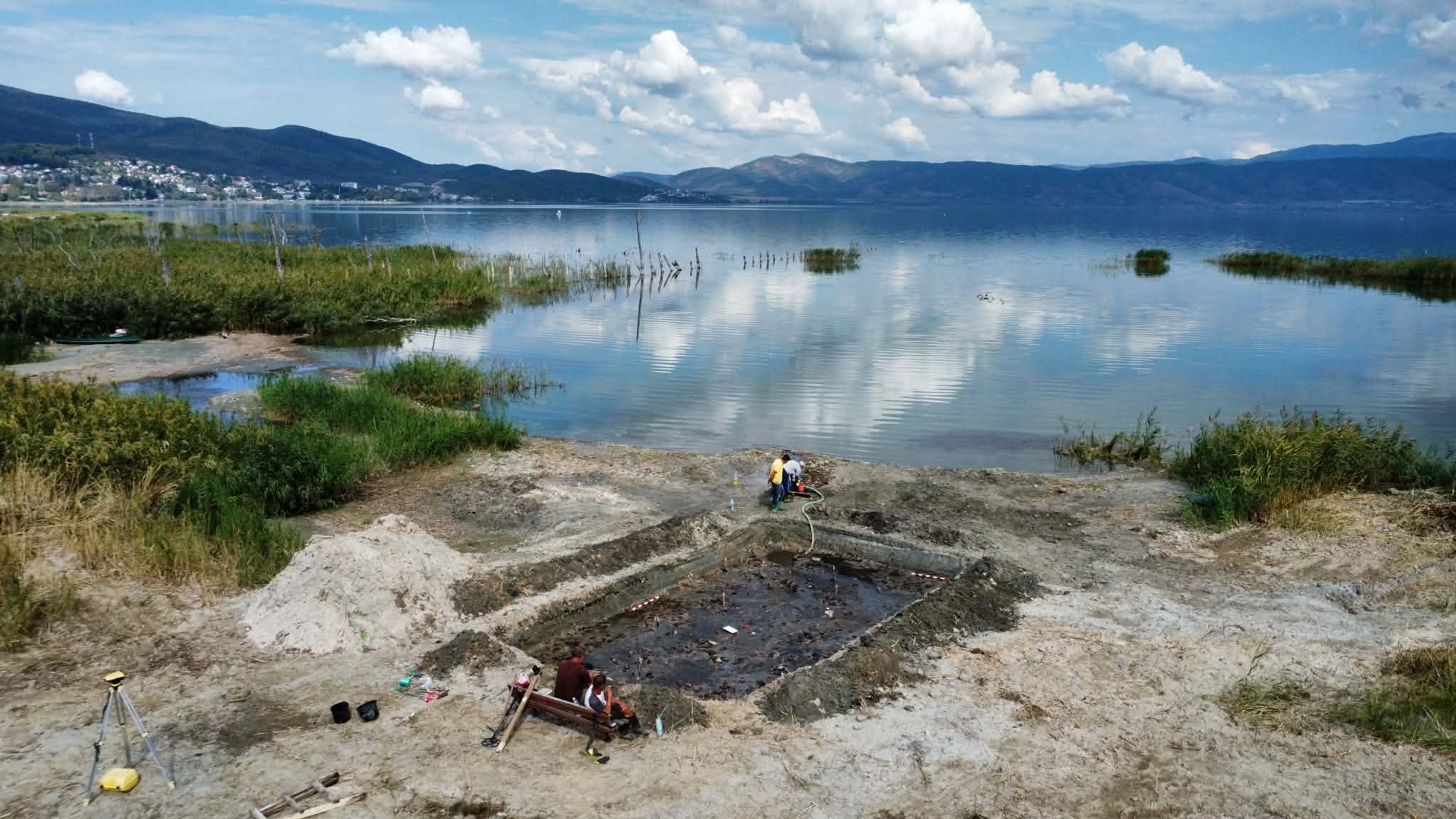
Previous research had placed Mrdaja in the Late Bronze Age and the transition to the Iron Age. However, new evidence dates its earliest occupation to the Middle Bronze Age, during the first half of the second millennium B.C.
Bronze tools and molds for casting double-sided axes provide evidence of metal production within the settlement. Researchers believe the metalworker’s house may have belonged to a community member whose specialized skills gave them a distinct social position.
Fragments of the building’s exterior revealed decorative circles, concentric rings, and spiral patterns. The discovery of cinnabar, possibly obtained from the Alshar mineral deposit, suggests the facade may also have been painted bright red.
Archaeological discoveries reveal religious practices and everyday life at Mirdaja
Other discoveries included pottery decorated with sun symbols, ritual objects known as “consecration horns,” a marine snail shell amulet, bronze wire rings, ceramic spindle whorls possibly used as fishing weights, and small lead weights.
Researchers believe the settlement developed throughout nearly the entire second millennium B.C. before coming to a violent end around the 12th century B.C., potentially linked to widespread instability and population movements toward the end of the Bronze Age.
Plans are underway to establish an open-air museum on the water in central Star Dojran to showcase archaeological discoveries and promote cultural tourism. The country’s Ministry of Culture and Tourism is supporting the archaeological research.
See all the latest news from Greece and the world at Greekreporter.com. Contact our newsroom to report an update or send your story, photos and videos. Follow GR on Google News and subscribe here to our daily email!

