



Greece has no shortage of famous winter destinations. Yet beyond the best-known mountain resorts, smaller villages offer a different kind of escape. Stone houses, forest trails, historic bridges and stories passed down through generations reveal a quieter side of the Greek countryside.
These five destinations offer more than scenic views. Each has its own history, traditions and reasons to explore it during the colder months. Snow can add to their beauty, but it is not the only reason to visit.

1. Ano Vlasia: Waterfalls and forest paths in Achaia
Built on a forested slope of Mount Erymanthos, Ano Vlasia stands at about 860 meters (2,822 feet) above sea level. The village lies around 27 kilometers (17 miles) from Kalavryta and offers an alternative to the area’s better-known winter stops. Stone houses, old fountains, streams and watermills reflect the area’s traditional character. The surrounding landscape also offers plenty to explore beyond the village streets.
One of its most striking natural attractions is the waterfall of Agios Taxiarchis. Water rushes through a rocky gorge before reaching a dark pool below. The nearby stone bridge of Liaskos, built over the Selinountas River, adds another historic feature to the landscape.
Ano Vlasia is a good choice for travelers who enjoy walking, forests and natural scenery. Visitors should check local conditions before heading to the waterfalls, particularly after heavy rain or during icy weather.

2. Vovousa: A stone bridge at the heart of the Pindus
In the Pindus mountains of Epirus
Vovousa stretches along both banks of the Aoos River. Its famous single-arch stone bridge connects the village’s two sides and remains its defining landmark. The bridge was built in 1748 by Alexios Misios. For centuries, it has served as more than a beautiful backdrop. It represents the connection between communities separated by the river.
Vovousa also has a difficult history. German forces burned the village in 1943, during the occupation of Greece. The Church of Saint George was among the few buildings that survived.
Today, the river, surrounding forests and proximity to the Northern Pindos National Park give the village a strong appeal for nature lovers. It is also associated with the protection of the Aoos River through the Vovousa Festival, an environmental and cultural initiative launched in 2015.
Winter visitors should prepare for mountain weather and check road conditions before traveling into the area.

3. Valtesiniko: The Arcadian village of woodcarvers
Valtesiniko lies at approximately 1,100 to 1,150 meters (3,609 to 3,773 feet) on the slopes of Mount Mainalo in Arcadia, Peloponnese. Fir and black-pine forests surround its stone houses, while traditional fountains and churches give the village a distinctive character.
Valtesiniko is particularly known for its woodcarving tradition. Local craftsmen developed skills in producing wooden objects and elaborate church furnishings, including carved icon screens. The work reflects a craft heritage that helped shape the cultural identity of mountain communities across Arcadia.
Visitors can explore the village’s churches, traditional lanes and surrounding countryside. The nearby Monastery of the Dormition of the Virgin and the historic Monastery of Saint Nicholas near Kapsalis Gorge add further interest. The village also lies on the Menalon Trail, a 75-kilometer (47-mile) hiking network connecting traditional settlements across the region. Winter walkers should choose routes according to weather conditions and their experience.
Valtesiniko offers a slower alternative to the busier destinations of Arcadia, with local craftsmanship and mountain scenery at the center of the experience.

4. Perivoli: A quiet gateway to Valia Kalda
Perivoli, in the Grevena region of Western Macedonia, belongs to the traditional Vlach villages of the Pindus mountains. The settlement lies within the wider landscape of Valia Kalda, one of Greece’s important protected forest areas.
Dense forests, mountain scenery and the traditions of pastoral life define the surrounding region. The village is a starting point for understanding the cultural heritage of the Vlach communities, whose livelihoods were closely connected to livestock raising and seasonal movement through the mountains.
The wider Grevena area is also known for its rich forest ecosystems and wild mushrooms, which have become part of the region’s culinary identity.
Perivoli is best suited to travelers who value quiet landscapes and nature rather than a busy resort atmosphere. However, winter travel requires careful planning. Local tourism information notes that some mountain villages in the area become almost deserted during the colder months. Visitors should confirm accommodation, road access and local services before setting out.
The appeal of Perivoli lies in its connection to the Pindus landscape and the traditions that continue to shape life in these mountain communities.
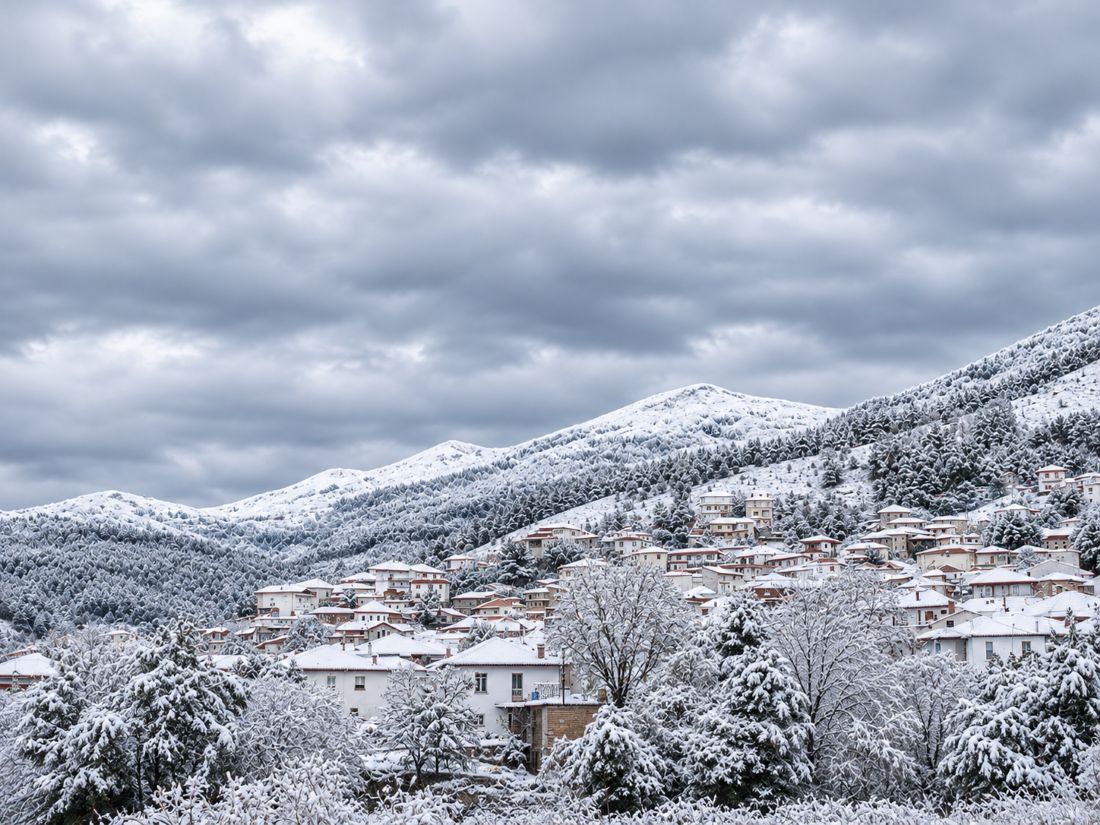
5. Lehovo: A mountain village shaped by history
Lehovo, in Florina, Western Macedonia, offers a winter visit with a deeper historical dimension. The village developed over centuries and became associated with communities that preserved their own language, customs and traditions.
Its most painful chapter came during World War II. From July 23 to 26, 1943, German occupation forces and their collaborators entered Lehovo, looted it and set fire to much of the settlement. The village’s library, established in 1927 and containing about 5,000 volumes, was among the buildings destroyed.
Lehovo was officially recognized as a martyred village in 1998. Its history remains part of the community’s collective memory. Travelers can learn more at the Ethnological and Folklore Museum of Lehovo, also known as the Georgios Gorantis Museum. Its collections include historical documents, traditional costumes, household objects, tools and rare church books dating from 1600 to 1850.
Lehovo offers more than a scenic mountain setting. It is a place to understand how a community preserved its identity and cultural heritage through periods of hardship.
See all the latest news from Greece and the world at Greekreporter.com. Contact our newsroom to report an update or send your story, photos and videos. Follow GR on Google News and subscribe here to our daily email!

