



Long before a tank crashed through the gates of the Athens Polytechnic on November 17, 1973, the military regime that ruled Greece for seven years (the “Heptaetia”) had picked another fight with the country’s young people: over the length of their hair and their skirts.
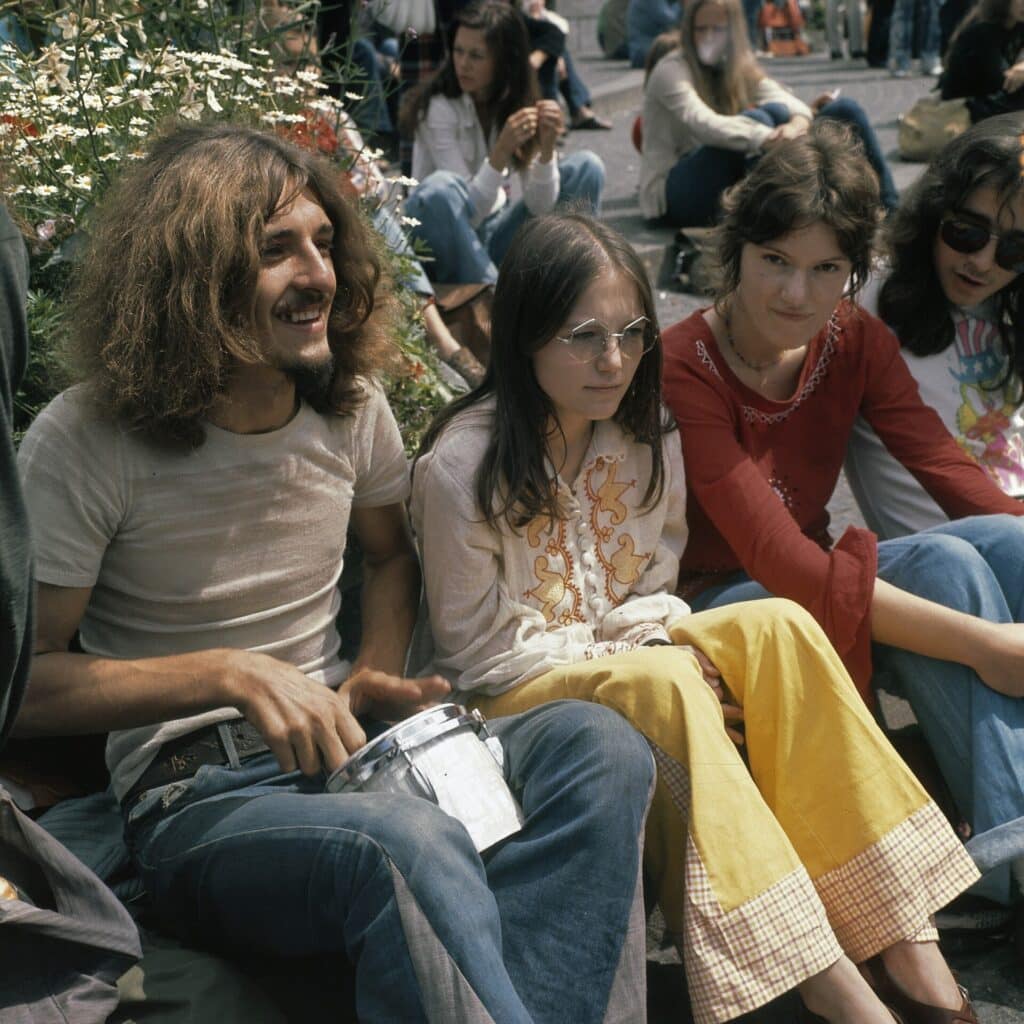
The junta, a group of army officers led by Colonel Georgios Papadopoulos who seized power in a coup on April 21, 1967, and ruled until July 1974, set out to impose what it presented as traditional Greek Christian morality. Alongside arrests of political opponents and strict censorship, its officials took aim at long hair on men, beards, miniskirts and the Western youth culture that came with them.
Many Greeks remember it simply as the era when long hair was banned. The record shows a mix of official denunciations, school rules and decrees, some enforced strictly and some barely at all.
Beards, miniskirts and “hippyism”
The regime’s interest in appearance was obvious within months of the coup. Writing in November 1967 in The New York Review of Books, Ronald Steel listed “the banning (never enforced) of beards and mini-skirts” among the new government’s measures, together with obligatory church attendance for civil servants.
In June 1967, British correspondent Richard West wrote in the Sunday Times that the regime seemed obsessed with “trifles” such as long hair and beards. He described a young Australian in Athens being questioned by police about the length of his hair.
The tone was set by senior officials. In a speech on August 6, 1968, Colonel Ioannis Ladas, secretary-general of the Ministry of Public Order, denounced young men with long hair as “the degenerate phenomenon of hippyism,” as historian Richard Clogg recorded. Ladas, who had commanded the Military Police in Athens at the time of the coup, described hippies as “anti-social elements, drug addicts, sex maniacs, thieves, etc.”
Rules in the classroom
Policing young men’s looks was not new in Greece. Under a “Teddy Boy” law of the late 1950s, police had partly shaved the heads of young offenders and paraded them through Athens.
Under the junta, schools were where young Greeks felt the rules most directly. Directives in most high schools during the junta years forbade long hair for male students, and those who did not comply risked expulsion. Girls were required to dress modestly, under rules set out in official announcements by local authorities.
Teacher-training colleges, known as Pedagogical Academies, went further. Their internal regulations banned miniskirts and even forbade students to share umbrellas in the schoolyard, whatever the weather. One education inspector of the period complained that miniskirts and eye make-up spread disgust.
Silencing a generation’s music
The cultural crackdown went well beyond haircuts. During this time, Greece even banned the reproduction or performance of the music and songs of composer Mikis Theodorakis anywhere in Greece, on the grounds that it served communism. Even playing “Zorba” in a taverna became illegal.
Censors kept blacklists of songs by other composers too. Western culture was watched closely: when the documentary Woodstock opened at the Pallas cinema in Athens on November 29, 1970, its second screening was cancelled and the film was banned.
From haircuts to the Polytechnic
For many young Greeks, these rules were a daily reminder of who held power, and students became the regime’s most visible opponents. On November 14, 1973, students occupied the Athens Polytechnic, and the protest grew into an open revolt against the junta.
In the early hours of November 17, a tank broke through the Polytechnic’s gates. A 2004 study by the National Hellenic Research Foundation identified 24 people who were killed during the events. On November 25, hardliner Dimitrios Ioannidis, head of the military police, overthrew Papadopoulos in a coup from within the junta.
The rule of the Colonels collapsed in July 1974, after Ioannidis’s coup against the president of Cyprus, Archbishop Makarios, triggered the Turkish invasion of the island, and democracy was restored. Each year on November 17, Greeks march from the Polytechnic to mark the uprising,reminding them of a time when even a young man’s hair could put him at odds with the state.
See all the latest news from Greece and the world at Greekreporter.com. Contact our newsroom to report an update or send your story, photos and videos. Follow GR on Google News and subscribe here to our daily email!

