



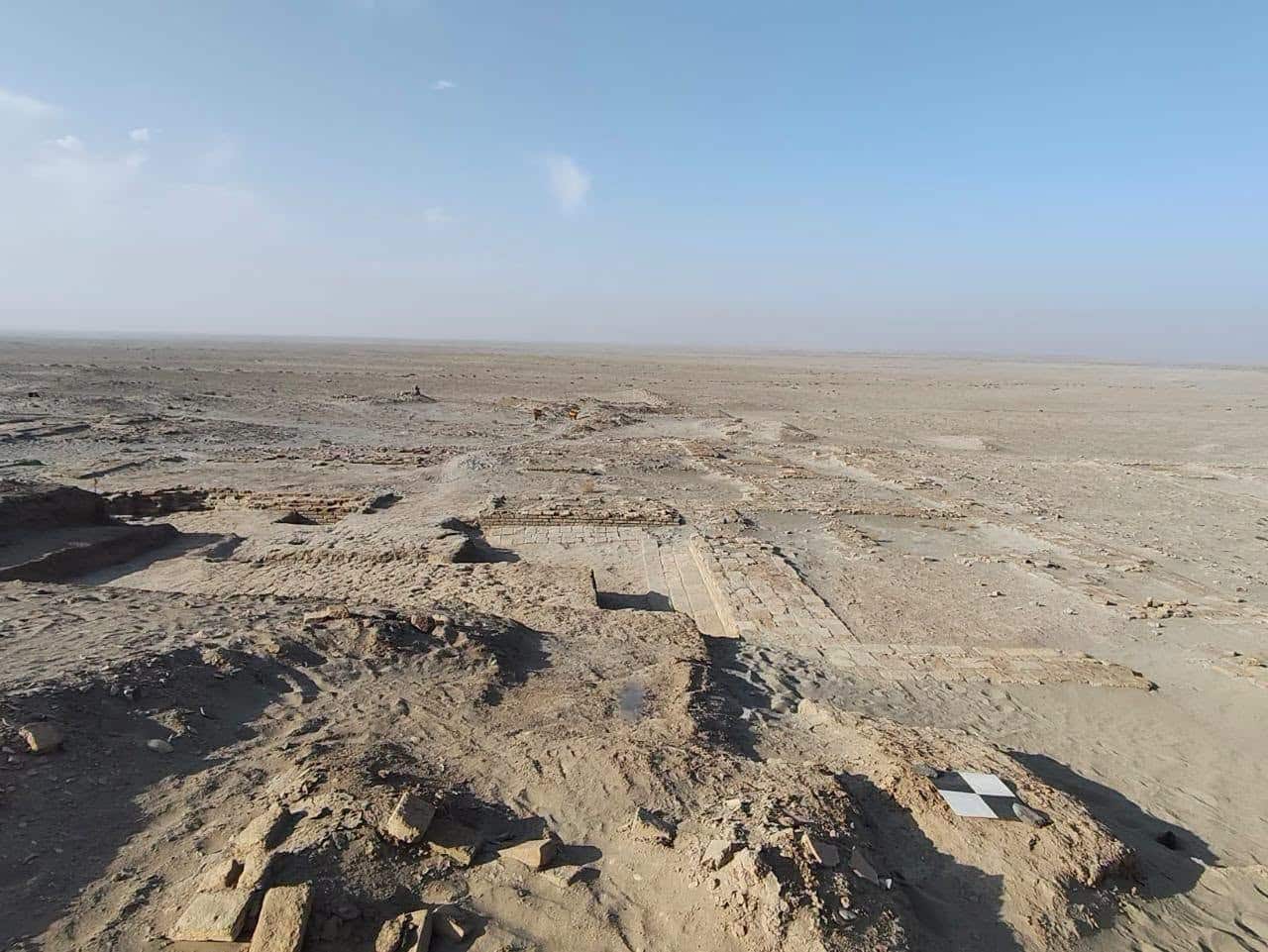
French and Iraqi archaeologists have uncovered more of a 3,800-year-old bridge in the ancient city of Larsa in southern Iraq, including a brick inscribed with the name of a Mesopotamian king. The structure crossed a major canal and offers new evidence of how people traveled through one of Mesopotamia’s leading cities during the Old Babylonian period.
Iraqi antiquities officials reported the latest excavation findings in November 2026. A French archaeological mission led by Régis Vallet is working with Iraqi specialists at Larsa, also known as Tell es-Senkereh, in Dhi Qar province.
The bridge crossed the Great Canal, a waterway approximately 22 meters (72 feet) wide that divided parts of the ancient city. Archaeologists have identified the structure, located near Larsa’s ziggurat, as B69.
Inscribed brick links bridge to ancient Mesopotamian king
One of the most important finds is a fired brick bearing the name of King Sin-iddinam, who ruled Larsa from 1849 to 1843 BCE. Archaeologists recovered the brick from the upper section of the bridge’s eastern support.
The inscription suggests that at least part of the structure was built or repaired during his reign. Similar royal inscriptions from ancient Mesopotamia have helped researchers trace the construction and restoration of major buildings. Sin-iddinam, the son of King Nur-Adad, carried out major construction projects involving temples, defensive walls, and canals. One surviving royal inscription describes repairs to a canal connected to the Tigris River.
French researchers first identified the bridge during surveys in 2019 and began excavating its brick supports in 2021. Their investigations revealed several phases of construction and repair, suggesting that the structure underwent changes over time.
According to Iraqi antiquities officials, archaeologists have now exposed approximately half of the bridge. Provincial officials also reported the recovery of a clay tablet containing information about the structure.
Ancient canals shaped life in Larsa
Larsa covered approximately 200 hectares and served as an important political and economic center in southern Mesopotamia. An extensive canal network connected the city with surrounding farmland and settlements. Similar ancient irrigation networks discovered near the Sumerian city of Eridu have revealed how early communities managed water to support agriculture and urban development.
Since resuming fieldwork in 2019, French archaeologists have mapped hundreds of canals and identified approximately 5.4 kilometers (3.4 miles) of city walls. They also documented water basins and a port area along the city’s southern edge.
The wider excavations have uncovered major buildings, including a possible religious residence near the Ebabbar Temple and a large house containing archive tablets linked to a senior official named Etellum. Other archaeological discoveries in ancient Sumerian cities have also revealed evidence of early political administration and urban life.
Work on the bridge continues. Further excavation could reveal its full layout and clarify how ancient builders maintained a crossing over one of Larsa’s main waterways.
See all the latest news from Greece and the world at Greekreporter.com. Contact our newsroom to report an update or send your story, photos and videos. Follow GR on Google News and subscribe here to our daily email!

