



Greece has launched an AI assistant to help disaster victims find information about state relief, including financial assistance, support measures and the procedures for obtaining them. The service, announced Tuesday by the Ministry of Climate Crisis and Civil Protection, is available on the ministry’s website and provides general guidance to people affected by natural disasters.
The ministry introduced the tool through its General Secretariat for Natural Disaster Recovery and State Aid. It is designed to make government assistance easier to understand without requiring users to know administrative terminology or navigate complex rules on their own.
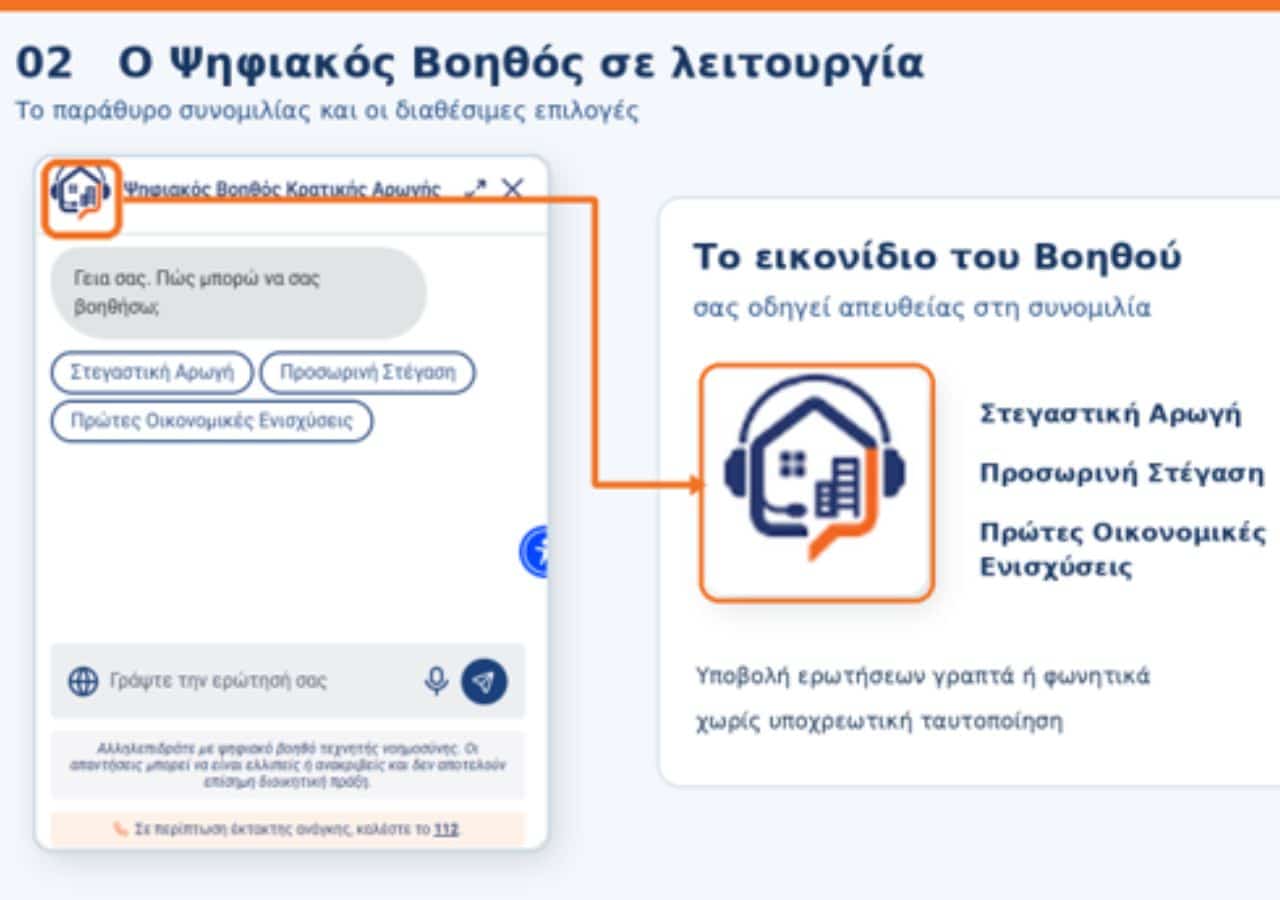
Visitors can open the assistant from an icon on civilprotection.gov.gr and use a chat window to ask questions. Screenshots released by the ministry show options for housing assistance, temporary housing, and initial financial aid. The service provides information about available support and the steps involved, rather than assessing individual claims.
How Greece uses an AI assistant to guide disaster victims
People can submit questions in Greek or English, either by typing or speaking. The assistant works on mobile phones and computers, and it remembers earlier questions within the same conversation so users can follow up without starting over.
Users can also rate the answers they receive. The ministry says this feedback will help improve the service. No identity verification or submission of personal information is required to access it, because the system is intended to answer general questions, not review individual cases.
The assistant uses large language models, the artificial intelligence technology behind conversational systems. It runs on Greece’s government cloud infrastructure, known as G-Cloud.
The ministry says its design and operation take account of the European Union’s General Data Protection Regulation, the EU’s AI Act and Greek Law 5321/2026, with an emphasis on privacy, transparency and equal access to information.
Official sources support answers, but government decisions remain separate
The ministry says the information behind the assistant is checked, assessed, and regularly updated to reflect relevant rules and the changing needs that follow a natural disaster. When technically possible, responses include references to official sources so users can check the information themselves.
📌 Σε λειτουργία ο Ψηφιακός Βοηθός Κρατικής Αρωγής – Άμεση ενημέρωση των πληγέντων πολιτών με την αξιοποίηση της τεχνητής νοημοσύνης
📄 https://t.co/noCNcpncK8 pic.twitter.com/DI4IrDZcDq
— Civil Protection GR (@CivPro_GR) November 3, 2026
The ministry also cautioned that artificial intelligence cannot guarantee every response is accurate, complete or sufficient. The answers are for information only. They do not count as official administrative decisions and cannot replace the government offices or procedures responsible for providing relief.
The ministry said the service is intended to make support information easier to find, reduce the effort involved in understanding available measures, and improve communication with people recovering from disasters. Its launch adds a new way to seek guidance, while formal relief decisions remain with the responsible authorities.
See all the latest news from Greece and the world at Greekreporter.com. Contact our newsroom to report an update or send your story, photos and videos. Follow GR on Google News and subscribe here to our daily email!

