



Archaeologists have identified a previously unknown Bronze Age settlement near ancient Troy in present-day northwestern Turkey. The site contains pottery similar to ceramics found at Troy, alongside unusual fragments that may point to connections with communities farther inland.
The settlement, known as Yaylatepe Höyük, lies on the Anatolian shore of the Dardanelles. Researchers believe its location could also offer clues about how prehistoric communities interacted across the narrow waterway separating Europe and Asia. A study by Dr. Meral Başaran of Fırat University provides the first scientific examination of the settlement, discovered in 2024 during the Dardanelles Bronze Age Ports Research Project. The findings were published in Arkeoloji Dergisi.
Pottery reveals similarities to ancient Troy
Researchers discovered numerous pottery fragments, clay loom weights and stone tools scattered across the settlement’s surface. Başaran examined 54 pottery fragments collected during surveys in 2024 and 2026.
About 62% were wheel-made, including at least 12 pieces showing evidence of production on a fast-spinning potter’s wheel. Several ceramics resemble pottery found at Troy. Others have distinctive features that researchers compared with examples from Beycesultan, an ancient settlement farther inland in western Anatolia.
The findings suggest Yaylatepe shared elements of wider pottery traditions, although direct contact between the settlements remains unproven. Researchers also identified evidence of skilled pottery production. Some vessels had thinner walls and more evenly prepared clay, particularly those dating to the later stages of the Early Bronze Age and subsequent periods.
The pottery spans several prehistoric periods, from the Late Chalcolithic to the beginning of the Late Bronze Age. Earlier excavations at Troy have also uncovered evidence of settlement dating back to about 3500 B.C. However, surface discoveries alone cannot establish Yaylatepe’s exact history.
Bronze Age settlements may have been connected across the Dardanelles
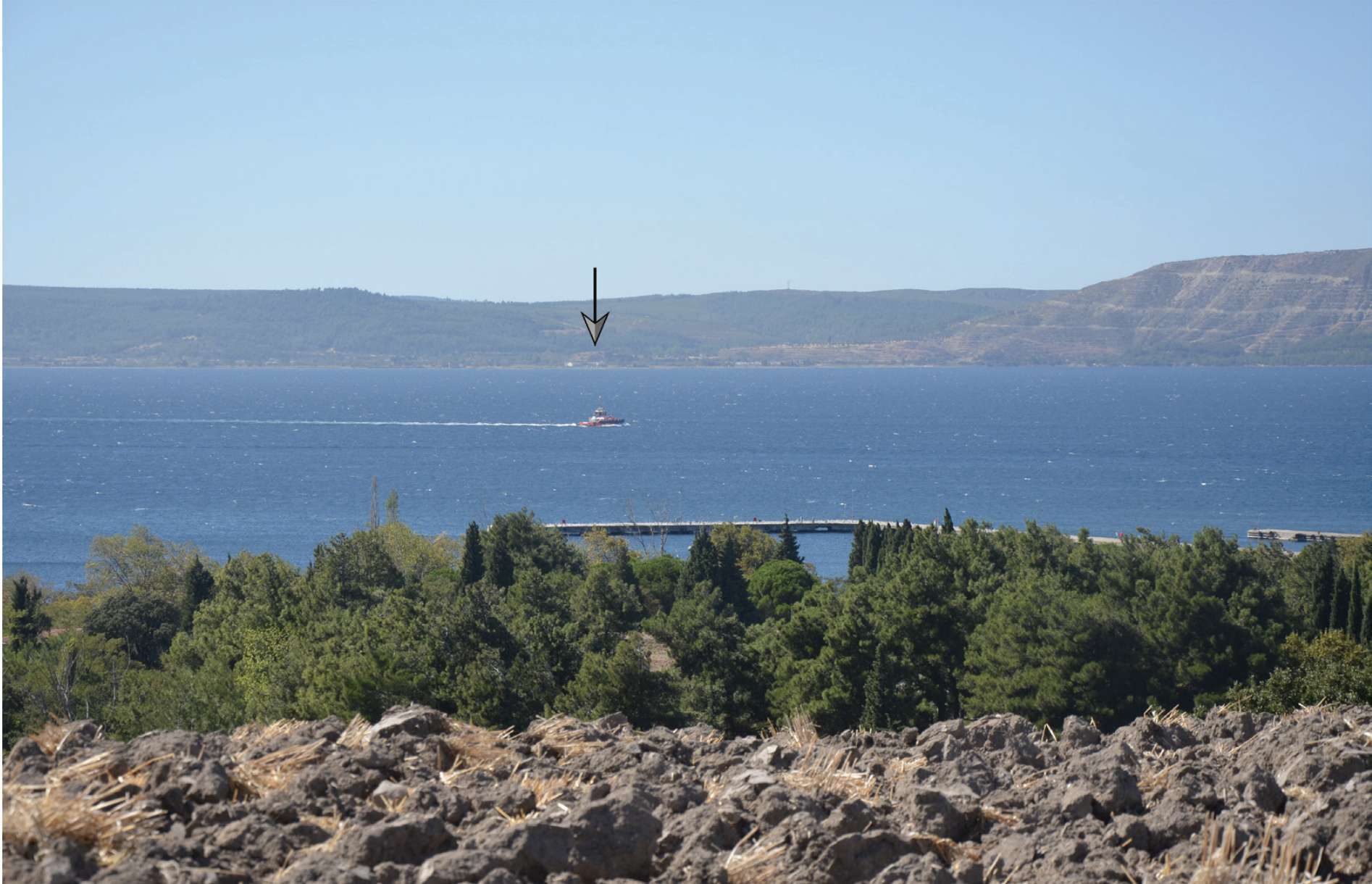
Yaylatepe stands opposite Asartepe, another prehistoric settlement on the European side of the Dardanelles (Greek: Ελλήσποντος). The two sites are approximately 4.2 miles (6.7 kilometers) apart. Using digital mapping technology, Başaran found no natural obstacles blocking the view between them. Field observations confirmed that Asartepe is visible from Yaylatepe in clear weather.
Both settlements occupy elevated areas near waterways and natural bays. Researchers suggest these locations may have helped inhabitants monitor maritime activity and bring small boats ashore. However, visibility does not prove that people regularly traveled or traded between the settlements. The discovery adds another site to the Bronze Age archaeological landscape surrounding Troy. Further excavations could help establish Yaylatepe’s history and clarify its possible role in connections between prehistoric Anatolia and southeastern Europe.
See all the latest news from Greece and the world at Greekreporter.com. Contact our newsroom to report an update or send your story, photos and videos. Follow GR on Google News and subscribe here to our daily email!

