



Saudi Arabia’s defense partnership with Turkey and Pakistan is moving toward military deployment as attacks claimed by Yemen’s Houthis strike civilian airports. The three countries agreed on October 5 to accelerate military support for the kingdom, ahead of airport attacks that Saudi authorities said killed three people and wounded 36 on October 6–7.
The developments are testing a mutual-defense agreement signed just two months earlier. But the deployment commitment concerns protecting Saudi territory. The countries’ joint statement does not announce Turkish or Pakistani participation in strikes inside Yemen.
Turkey and Pakistan Move to Implement Saudi Defense Commitments
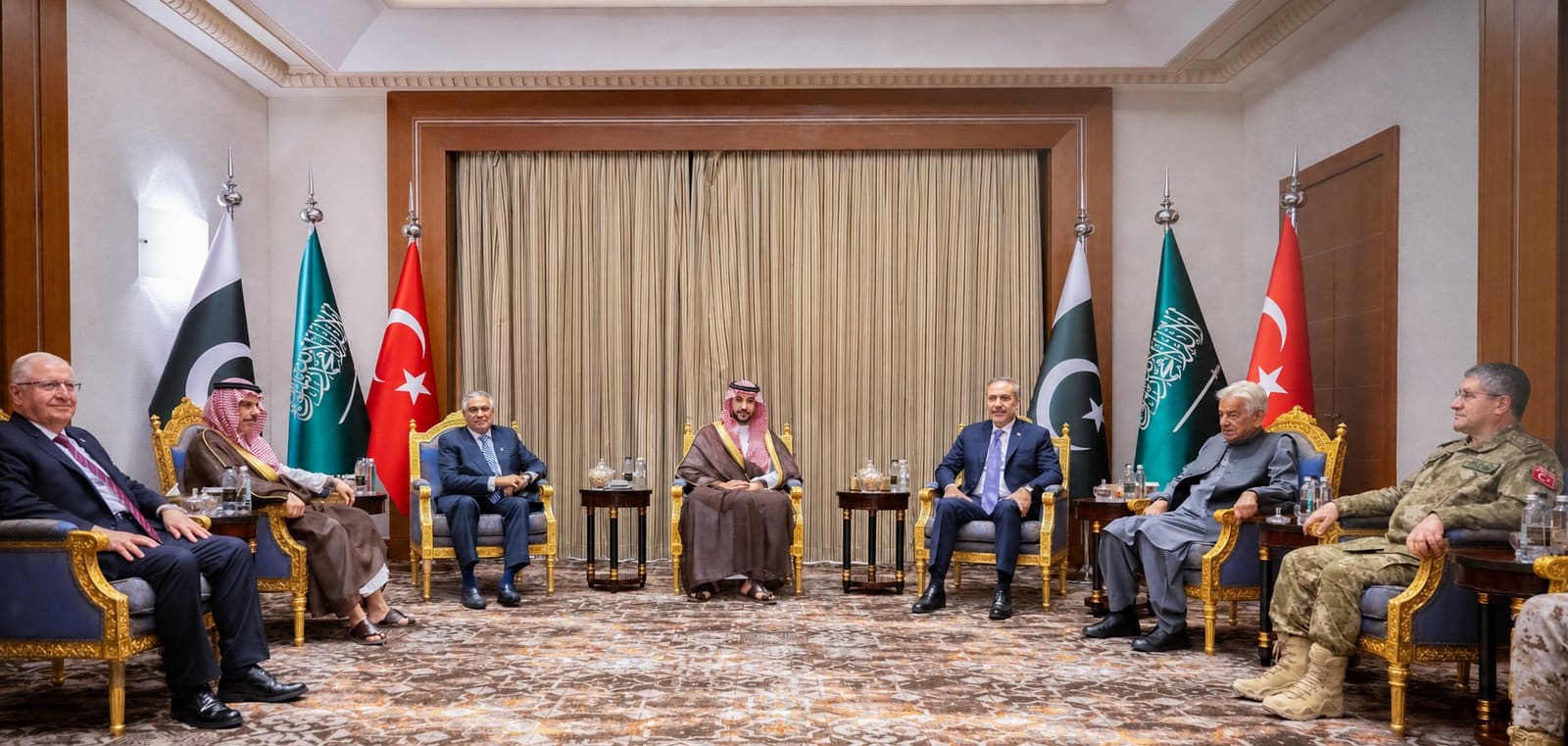
At an emergency meeting in Riyadh on October 5, representatives of the three governments agreed to provide military forces and capabilities for rapid deployment in Saudi Arabia. Their joint statement said implementation would follow agreed arrangements and each country’s national legislation. It however disclosed neither troop numbers nor an arrival schedule.
Additionally, the Makkah Joint Defence Agreement, signed on August 7, 2026, provides that an armed attack against one member is considered an attack against all three. Saudi Crown Prince Mohammed bin Salman, Turkish President Recep Tayyip Erdogan and Pakistani Prime Minister Shehbaz Sharif signed the accord in Mecca.
Pakistan had already publicly signaled its willingness to assist. Speaking in Rome on September 29, Defense Minister Khawaja Muhammad Asif said his country would make its military capabilities available to defend Saudi Arabia. Asked whether Pakistani forces had participated in airstrikes, he declined to give details, according to the Associated Press.
Turkey’s role also requires qualification. El País reported on October 7 that Ankara was preparing to expand its military support. However, a broader deployment required parliamentary authorization.
Houthis Claim Airport Attacks as Civilian Toll Rises
Saudi aviation authorities reported three deaths and 36 injuries following attacks on Abha International Airport and Riyadh’s King Khalid International Airport on October 6–7. Two people were killed and 28 wounded at Abha, while one person was killed and eight wounded in Riyadh. Authorities also reported material damage.
The Iran-backed Houthis claimed responsibility for attacks on both airports. Military spokesman Yahya Saree said the Riyadh strike disrupted air traffic. On October 8, the group claimed another attack against King Khalid airport and renewed its warning to airlines to avoid Saudi airspace. That later claim is separate from the attacks covered by the earlier casualty announcement.
The Saudi-led coalition announced retaliatory strikes against 82 military targets, including missile facilities, command centers and communications systems. The number of targets and the extent of their destruction remain the coalition’s account, not an independently verified damage assessment.
Fighting in Yemen Complicates the Regional Response
Saudi Arabia leads the coalition supporting Yemen’s internationally recognized government against the Houthis. Renewed fighting has brought competing claims over territory along Yemen’s Red Sea coast. The government forces announce gains and the Houthis insisting they retain their positions. Furthermore, AFP reported that military sources contacted on both sides had not confirmed major changes on the ground.
The alliance’s public commitment remains focused on Saudi security. Its October 5 statement condemned attacks on civilian and economic facilities and called for military deployment inside the kingdom. It left the force’s size, precise responsibilities and operational timetable unspecified, and did not announce a joint combat mission in Yemen.
See all the latest news from Greece and the world at Greekreporter.com. Contact our newsroom to report an update or send your story, photos and videos. Follow GR on Google News and subscribe here to our daily email!

