



Archaeologists excavating an ancient Roman settlement in Germany have discovered a temple dedicated to Mars, along with votive stones and statues that shed new light on religious life at the edge of the Roman Empire.
The discoveries were made near the Kapersburg Roman fort in Hesse, one of the best-preserved military sites along the Upper Germanic-Raetian Limes. Researchers are examining the vicus, a settlement that developed outside the fort and has received far less archaeological attention than the military complex itself.
Kapersburg housed the Roman auxiliary unit Numerus Nidensium for about 150 years. The unit is believed to have originated from Nida, the ancient Roman settlement in present-day Frankfurt-Heddernheim.
Romans abandoned the fort around the middle of the third century during the collapse of the Limes frontier. The Limes formed part of a vast system of fortifications protecting the frontiers of the Roman Empire. Excavations carried out more than 125 years ago by Louis Jacobi and the Imperial Limes Commission appeared to support that history. New research, however, is revealing more about what happened around the fort before and after the Roman withdrawal.
Temple dedicated to Mars found outside Roman fort
The temple is among the most important discoveries from the third year of excavations at the vicus. Archaeologists believe it was dedicated to Mars, the Roman god of war. Inside the temple area, the team uncovered two votive stones and a statuette of Victoria, the Roman goddess of victory. Researchers also found fragments of another statue that may have depicted Mars.
Experts are now studying inscriptions on the votive stones. The work involves researchers from the University of Frankfurt, including Professor Markus Scholz, who also helped translate a votive stone discovered during the previous excavation campaign.
The site’s location has helped preserve its archaeological remains. Kapersburg lies in the wooded foothills of the Taunus Mountains, where structures can be found just centimeters beneath the forest floor.
Finds suggest activity continued after Romans left
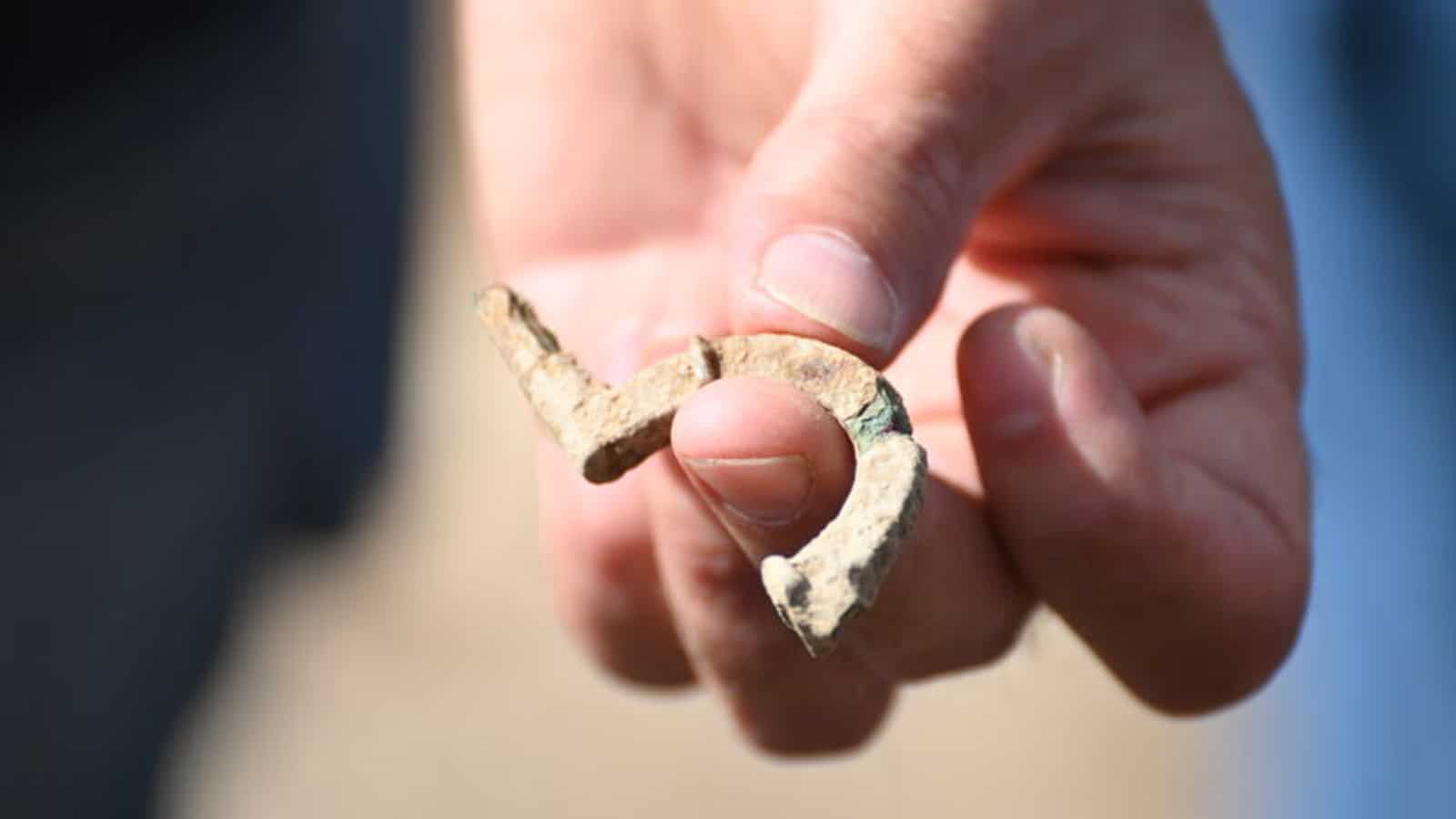
Other discoveries could provide the first archaeological evidence that the area remained in use after the Limes period. Archaeologists recovered a late antique fibula, or clothing fastener, and fragments of handmade pottery from the temple area.
Researchers believe the finds could be associated with the Alamanni, a Germanic group that settled in the Wetterau region. Recent research in southern Germany has also provided new evidence about population changes along former Roman frontier territories.
Excavations have also revealed extensive evidence of Roman craft activity, including a forge. Layers of leveled ground suggest the Romans reorganized parts of the settlement before constructing residential buildings there.
Traces of roads and terracing are helping archaeologists determine the settlement’s size and layout. District archaeologist Kai Mückenberger hopes investigations will continue with University of Frankfurt students next year. More than a century after Kapersburg’s first major excavations, significant parts of the settlement’s history remain unexplored.
See all the latest news from Greece and the world at Greekreporter.com. Contact our newsroom to report an update or send your story, photos and videos. Follow GR on Google News and subscribe here to our daily email!

