



One of Greece’s most significant archaeological sites, the monumental Nicopolis in Epirus, has been officially handed back to the local community and the general public. With the completion of a broad spectrum of interventions by the Ministry of Culture, the city founded by Augustus to commemorate his victory at Actium once again reveals its splendor and historical depth.
This remarkable cultural asset serves as the spearhead for a strategic national goal: the inscription of Nicopolis on the UNESCO World Heritage List.
Completion of Pivotal Infrastructure and Enhancement Projects
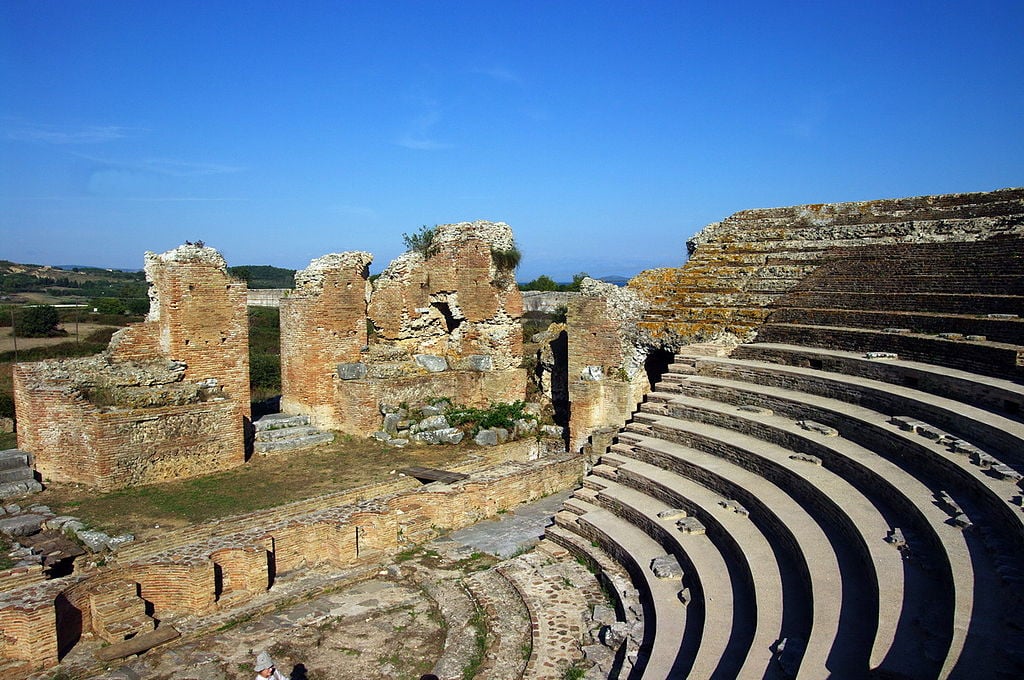
The projects implemented in the area have fundamentally transformed the image of the archaeological site, highlighting monuments of global importance. Among them, the completion of the second phase of protection, conservation, and restoration of the Great Theater of Nicopolis stands out. This emblematic structure from the Augustan period was extensively renovated in the 2nd century AD and could host approximately 8,000 spectators.
Simultaneously, the works covered critical sections of the ancient topography, such as the imposing complex known as the Palace or the House of Georgios Ekdikos. This is a massive Roman residence spanning roughly ten acres that occupies an entire city block, developing across multiple levels with successive repair phases from the 1st to the 7th century AD.
Stunning Mosaics and the Zenith of Early Christian Basilicas
A special place in the comprehensive presentation of the archaeological site is held by the famous mosaic floors, which have been meticulously conserved to remain accessible yet protected. In Basilica A (of Dometios) and Basilica B (referred to as Basilica IV), the mosaics impress with their high artistic quality, bringing to light floral and animal motifs, alongside rich maritime scenes and hunting depictions.
The inscriptions brought to light, directly linked to Bishop Dometios, offer invaluable insights to researchers regarding the ecclesiastical organization, history, and function of the churches during the Early Christian period, confirming that Nicopolis served as a vital cultural and religious crossroads of the Mediterranean.
A Strategic National Goal: UNESCO Inscription
The unveiling of the revitalized Nicopolis to the public goes hand in hand with critical institutional developments. As highlighted by the leadership of the Ministry of Culture, the preliminary dossier has already been submitted for evaluation, marking the official launch of the demanding process for the monument’s inclusion in the UNESCO World Heritage List.
Close cooperation between the central administration, the Region of Epirus, the Municipality of Preveza, and the local Ephorate of Antiquities forms a robust framework for protection. Nicopolis is now closer than ever to gaining the international recognition it deserves, opening new horizons for the cultural and tourism development of the entire wider region.
See all the latest news from Greece and the world at Greekreporter.com. Contact our newsroom to report an update or send your story, photos and videos. Follow GR on Google News and subscribe here to our daily email!

