



Archaeologists have uncovered a set of painted Teotihuacan glyphs hidden inside a small Mexican cave at the ancient site of Chalcatzingo, offering new evidence that warriors from the powerful Teotihuacan empire once traveled there to honor their dead. The discovery, published in the journal Antiquity, sheds light on a religious tradition that continued long after Chalcatzingo’s famous Olmec stone carvings were made.
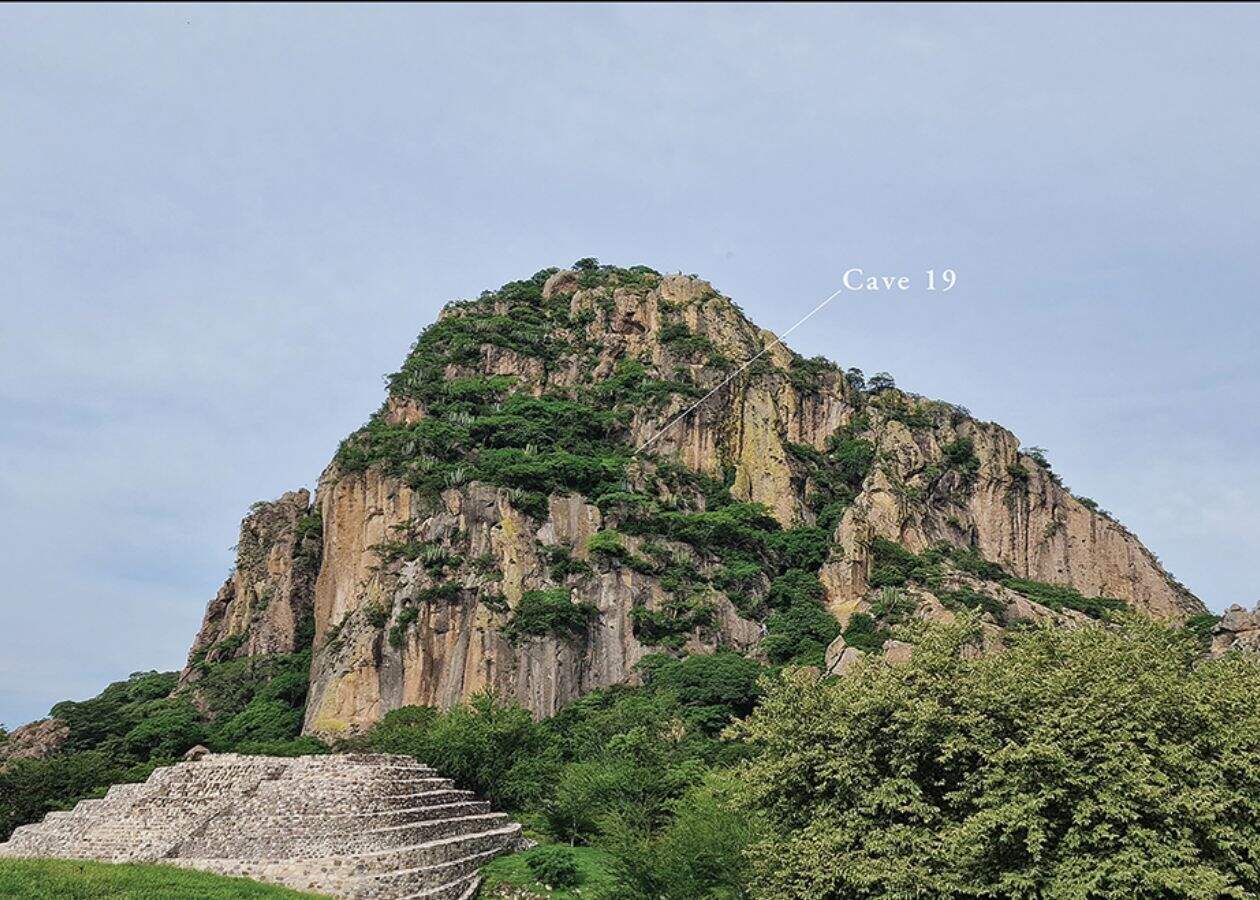
The glyphs were found in a rock shelter known as Cave 19, tucked into the western face of Cerro Delgado, one of two hills that frame the archaeological site about 90 kilometers (56 miles) southeast of Mexico City. A research team led by Christophe Helmke of the University of Copenhagen documented the cave in August 2022, decades after the glyphs were first noted by another researcher in the 1980s.
The study noted that the glyphs were painted in dark red pigment, likely made from a reddish mineral called hematite, sometime between the fourth and sixth centuries. They sit near a small stone shelf blackened by fire, suggesting the cave was once used for burning rituals tied to worship.
Teotihuacan glyphs in the Mexican cave point to a warrior’s rank
The first glyph shows a stylized mountain flanked by curling scrolls that represent speech or song in Teotihuacan writing, the researchers said. They believe it names the location itself as “Singing Mountain,” a title that matches an old Nahuatl name once used for a nearby hill, Cuicatepec. The match suggests local people kept using the same name for the mountain for more than a thousand years.

The second glyph combines a beaded necklace, a piece of cloth, and an upright dart, items tied to warrior clothing in Teotihuacan culture. The team believes the symbol marks a military rank or title rather than spelling out a place name.
The third glyph is different. It shows a rectangular frame decorated with five-pointed stars, a pattern also seen on ceremonial incense burners from Teotihuacan used to honor fallen soldiers. Positioned directly above the burned stone shelf, the researchers say this glyph points to a ritual honoring dead warriors, possibly even the cremation of a warrior’s remains.
Scholars once doubted Teotihuacan had a true writing system
For years, some scholars doubted that Teotihuacan had a true writing system, treating its symbols as simple pictures rather than a language. Recent research has challenged that view, identifying nearly 120 signs used to record place names, personal names, titles, and actions, much like the scripts used by the Maya and Aztec.
The findings also fit a wider pattern of Teotihuacan influence in the region. A nearby settlement called San Ignacio, about 13 kilometers (8 miles) south of Chalcatzingo, was already home to a large Teotihuacan community by the third century, according to earlier survey work.
Researchers say the Teotihuacan glyphs found in the Mexican cave show that the empire’s reach into Chalcatzingo went beyond trade and settlement, extending into religious life and the memory of the dead centuries after the Olmec era had ended.
See all the latest news from Greece and the world at Greekreporter.com. Contact our newsroom to report an update or send your story, photos and videos. Follow GR on Google News and subscribe here to our daily email!

