



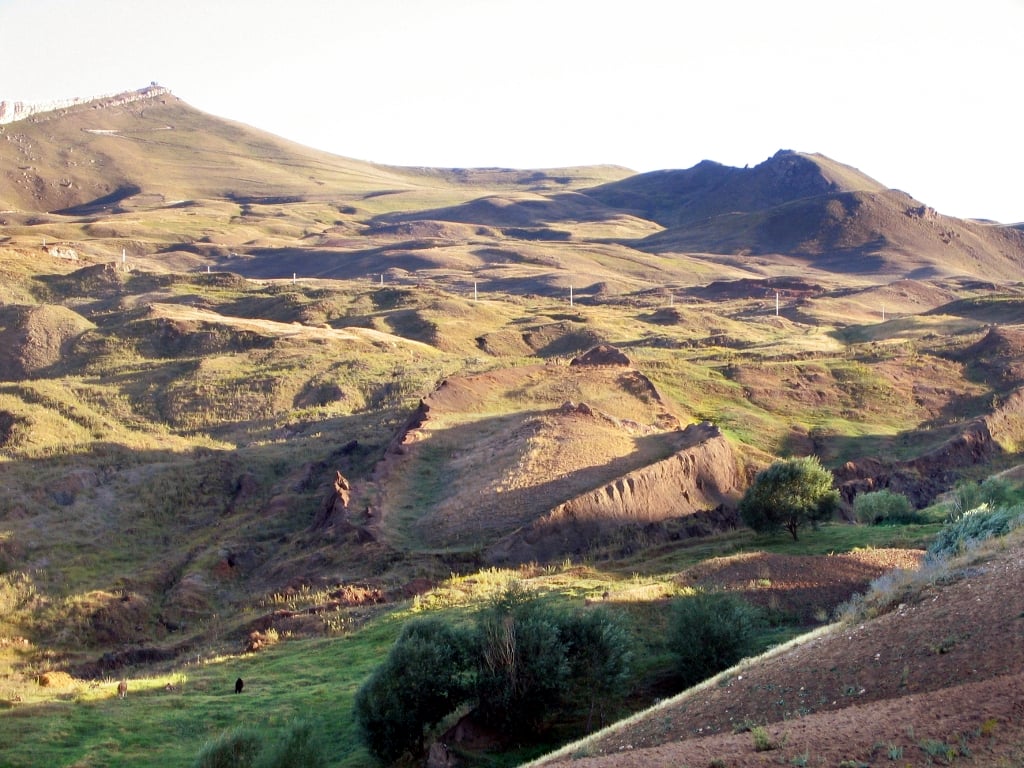
Researchers searching for Noah’s Ark near Mount Ararat have uncovered new pottery fragments during a major investigation of a boat-shaped formation in eastern Turkey. The international team also collected nearly 1,000 soil samples from about 150 locations during its 2026 field season. The findings are part of an ongoing effort to determine whether the unusual landform contains traces of the biblical vessel.
Led by archaeologist Cenker Atila of Sivas Cumhuriyet University, the expedition involved approximately 20 researchers from five countries. The team spent about 90 days examining the Durupınar Formation near Doğubayazıt in Ağrı province.
The pottery fragments may predate the biblical flood, according to the researchers, although their age has not been established. The team also conducted detailed mapping and underground radar surveys to identify areas for further investigation. Samples recovered from beneath the formation have been sent to Ankara for laboratory testing.
New pottery adds to Noah’s Ark search near Mount Ararat
The latest discoveries follow unusual underground radar readings reported in August. According to Sivas Cumhuriyet University, the surveys detected features with relatively regular edges, some intersecting at right angles, along with possible underground cavities. Researchers suggested the patterns could represent compartments or other structural elements, but their origin remains uncertain.
Greetings from the Mountains of Ararat! Pottery that predates the flood era has been directly outside of the remains of Noah’s Ark.
The pottery predates the flood, but is made from material consistent with pottery used during Methuselah and Noah’s lifetime.
It’s quite… pic.twitter.com/mWMc8YWK7W
— Lauren Witzke (@LaurenWitzkeDE) September 16, 2026
Preliminary soil measurements also revealed carbon levels approximately 40% higher inside the formation than outside it. Atila suggested the difference might indicate organic material, potentially including decayed wood. Further laboratory testing is needed to determine what caused the elevated readings.
In a separate announcement on Wednesday, Noah’s Ark Scans reported that researchers had begun collecting deep core samples from the site. The organization said drilling had encountered organic-rich layers and cavities, while a drill bit broke after striking a particularly hard layer 4 to 5 meters (13 to 16 feet) underground.
Drilling and laboratory tests could provide further answers
The team is also preparing to deploy a specially designed underground camera called GOPHER to examine cavities identified during earlier surveys. Neither the hard material encountered during drilling nor the reported underground features have been confirmed as remains of an ancient vessel.
The formation, approximately 157 meters (515 feet) long, was first identified in aerial photographs by Turkish Army Capt. İlhan Durupınar in 1959. Its resemblance to a ship has attracted explorers for decades.
Researchers now plan to examine the latest samples for their composition and possible organic remains, with radiocarbon dating where suitable material is available.
See all the latest news from Greece and the world at Greekreporter.com. Contact our newsroom to report an update or send your story, photos and videos. Follow GR on Google News and subscribe here to our daily email!

