



Nine days after the Dormition of the Virgin Mary on August 15, Orthodox Christians in Greece mark the Apodosis (Leavetaking, meaning “completion”) of the Feast of the Dormition, widely known as the Nine Days of the Virgin Mary. On August 23, religious services and processions take place in communities across Greece, while in some places, the celebration is closely connected to distinctive icons, historic monasteries, and local traditions that have endured for generations.
From the lilies associated with the Panagia tou Harou on Lipsi to the pirate reenactment that fills the harbor of Naousa on Paros, these five places offer a glimpse into the religious and cultural traditions surrounding August 23.
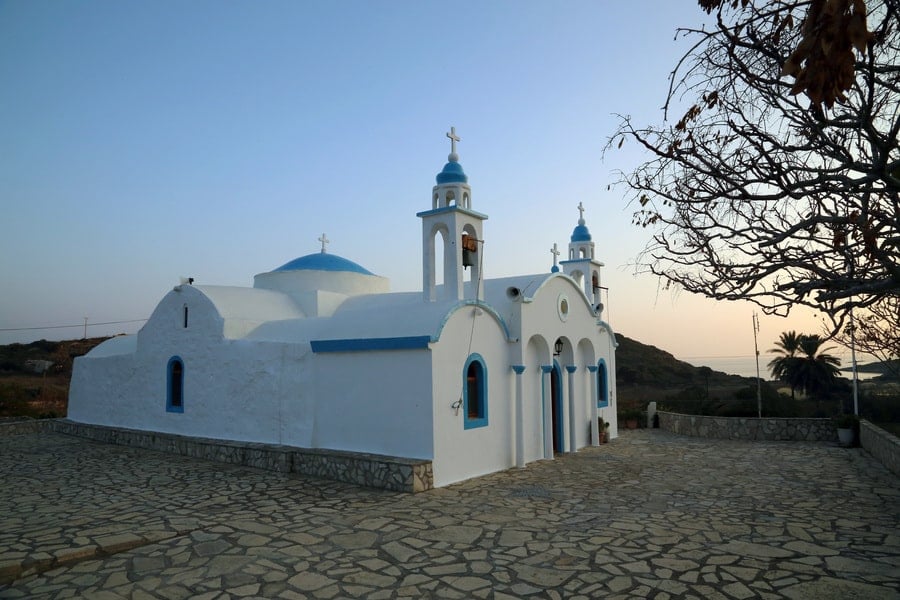
Panagia tou Harou, or the Holy Virgin of Death—Lipsi
The Panagia tou Charou, or Holy Virgin of Death, on Lipsi is one of the Dodecanese’s most distinctive Marian shrines. The small church is known for its unusual icon, which depicts the Virgin Mary holding the dead Christ on the Cross rather than the infant Jesus. The Municipality of Lipsi identifies the church as a major local pilgrimage site with its feast being held on August 23.
The shrine is particularly associated with a tradition involving white lilies. According to testimonies preserved by the Municipality, in April 1943, a young woman placed white lilies before the icon. The flowers eventually withered, but visitors later noticed that the stems had begun to turn green again. By August 23, the lilies reportedly had produced new buds. Local believers have regarded the phenomenon as a recurring sign associated with the Virgin Mary. The story should be understood as a religious tradition and local testimony rather than as a scientifically established miracle. Nevertheless, the annual August 23 celebration remains one of the defining religious events on Lipsi, drawing pilgrims to the small church and its unusual icon.
Panagia Prousiotissa (Holy Prousou Monastery)—Prousos, Evrytania
High in the mountains of Evrytania, the Monastery of Panagia Prousiotissa is one of Central Greece’s most important pilgrimage destinations. The monastery has Byzantine roots and developed over the centuries around the revered icon of the Virgin Mary. The complex is dated to the Byzantine period, while the feast day is August 23. At the center of the complex is the katholikon, built in 1754, along with the cave chapel known as the Chapel of the Finding, where the sacred icon is kept. The chapel was constructed in stages between the 13th and 14th centuries and again in the 16th century. The monastery also preserves religious treasures, manuscripts, icons, and objects associated with the region’s history.
The story of the icon’s arrival in Evrytania belongs to the monastery’s religious tradition. According to that tradition, the icon originated from Prusa in Asia Minor and was eventually found in the mountains of the region. The monastery’s later history is also closely connected with the history of modern Greece. Its collection includes weapons associated with revolutionary leader Georgios Karaiskakis, while the silver covering of the icon is traditionally recorded as his donation. The combination of Byzantine tradition, Greek history, and the dramatic mountain landscape makes Prousou one of the most significant destinations associated with the August 23 feast.
Panagia Loutriotissa—Sami, Kefalonia
In Sami on Kefalonia, the Panagia Loutriotissa combines religious celebration with the maritime history of the Ionian Islands. The parish church celebrates its feast on August 23. The Municipality of Sami’s published program includes the Divine Liturgy and an evening procession of the icon through the town, followed by a traditional festival.
The icon is also connected in local historical accounts with the Venetian period of Kefalonia and the wider Mediterranean world. Historical material concerning the church points to a Latin dedicatory inscription associated with the Venetian victory at the Battle of Lepanto in 1571. That association gives the celebration a historical dimension that extends beyond the religious festival itself. The Ionian Islands spent centuries within the Venetian sphere, and their churches and religious art preserve many traces of that period. On August 23, however, that history remains a living tradition as the icon is carried through Sami in a procession attended by residents and visitors.
Holy Monastery of Panagia Portaitissa—Kornofolia, Evros
In the village of Kornofolia near Soufli in Evros, the Monastery of Panagia Portaitissa preserves another chapter of Greece’s religious history. The monastery is dedicated to the Dormition of the Virgin Mary and holds its principal celebration during the Nine Days on August 23. It is situated less than a mile west of Kornofolia on a hill known as Kouri. Its most notable historical connection is with Iviron Monastery on Mount Athos.
According to historical accounts of the monastery, Kornofolia became a metochion, or dependency, of Iviron in the early 18th century. Its name, Panagia Portaitissa, reflects its connection to the famous Portaitissa icon of Iviron Monastery on Mount Athos. The distinction is important. The famous legends surrounding the original Portaitissa icon belong to the Athonite tradition and should not automatically be attributed to the icon at Kornofolia. What makes Kornofolia significant is its own history: a relatively little-known Thracian monastery that became connected to one of Mount Athos’ most important monasteries and continues to celebrate the Dormition on August 23.
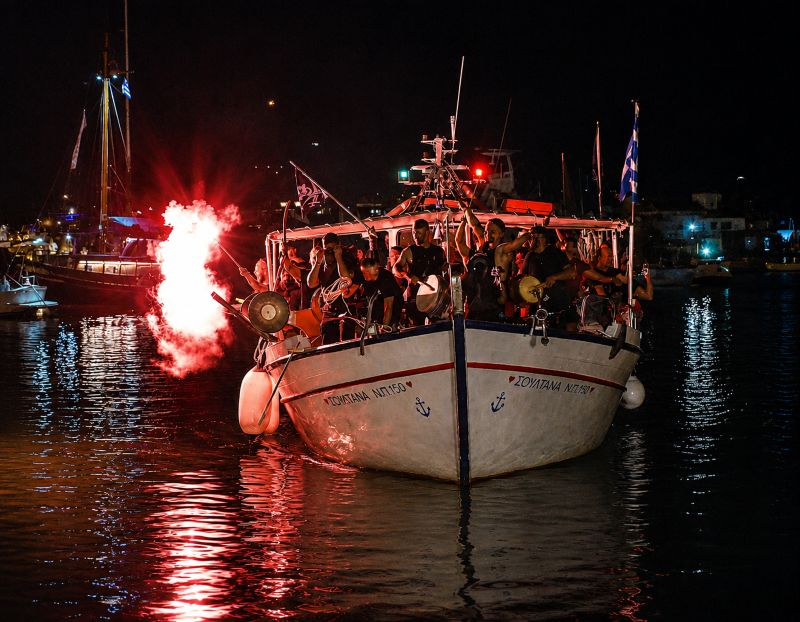
Naousa, Paros—the Nine Days of the Virgin Mary and Pirate Night
The celebration of the Nine Days is dramatically different in Naousa on Paros. Every August 23, the island holds its famous Koursariki Vradhia, or Corsair Night, a local tradition connected to the Nine Days of the Virgin Mary. The Municipality of Paros describes it as a reenactment of the attack of Barbarossa and his corsairs on Naousa in 1537.
According to the municipality’s description, the reenactment takes place around the harbor, with participants dressed as pirates arriving from the sea to recreate the attack. Flares, fireworks, music, dancing, and local food transform the historical memory into one of Paros’ best-known summer traditions. The event should be interpreted as a modern reenactment of historical memory rather than as a literal reconstruction of everything that happened during the 1537 raid.
Its connection to the religious feast is nevertheless explicit, and the municipality describes the event as taking place on August 23 on the Nine Days of the Virgin Mary. The result is an unusual combination of sacred celebration and local history. In Naousa, the commemoration of the Virgin Mary becomes the setting for one of the most theatrical historical traditions on a Greek island.
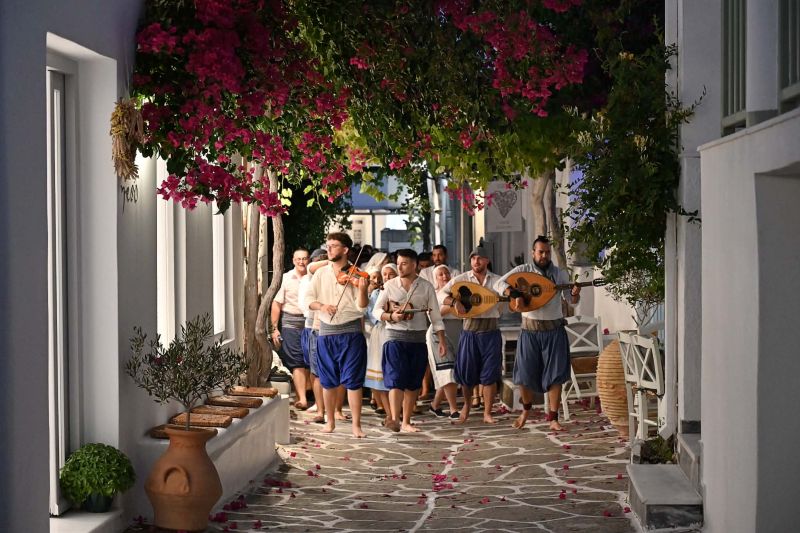
A feast with many local stories: The Nine Days of the Virgin Mary
The Nine Days of the Virgin Mary are observed throughout Greece, but the traditions surrounding August 23 vary dramatically across the country. On Lipsi, the celebration is inseparable from the unusual icon of the Panagia tou Harou and the tradition of the blooming lilies. In Prousou, the feast centers on a Byzantine-era monastery and its revered icon, while in Sami, religious tradition intersects with the Venetian history of the Ionian Islands. Furthermore, in Kornofolia, the celebration preserves the connection between a Thracian monastery and Mount Athos. The religious feast in Naousa on Parosis is accompanied by a spectacular reenactment of a 16th-century corsair raid.
In conjunction, these traditions reflect the importance of August 23, which is, undeniably, more than just a date on the Orthodox calendar. Across Greece, the Nine Days of the Virgin Mary bring together faith, history, local memory, and living tradition.
See all the latest news from Greece and the world at Greekreporter.com. Contact our newsroom to report an update or send your story, photos and videos. Follow GR on Google News and subscribe here to our daily email!

