



A new study of ancient leaves and other plant remains from the Lesvos petrified forest is revealing a far more diverse ecosystem than the site’s spectacular preserved tree trunks alone suggest.
About twenty million years ago, the landscape of the Greek island of Lesvos looked nothing like it does today. Instead of the dry Mediterranean terrain visible across parts of western Lesvos, a rich forest covered the region. Conifers, broad-leaved trees, palms and other plants grew across a landscape shaped by lakes, volcanic activity and a much warmer climate. Today, much of that lost world survives in stone.
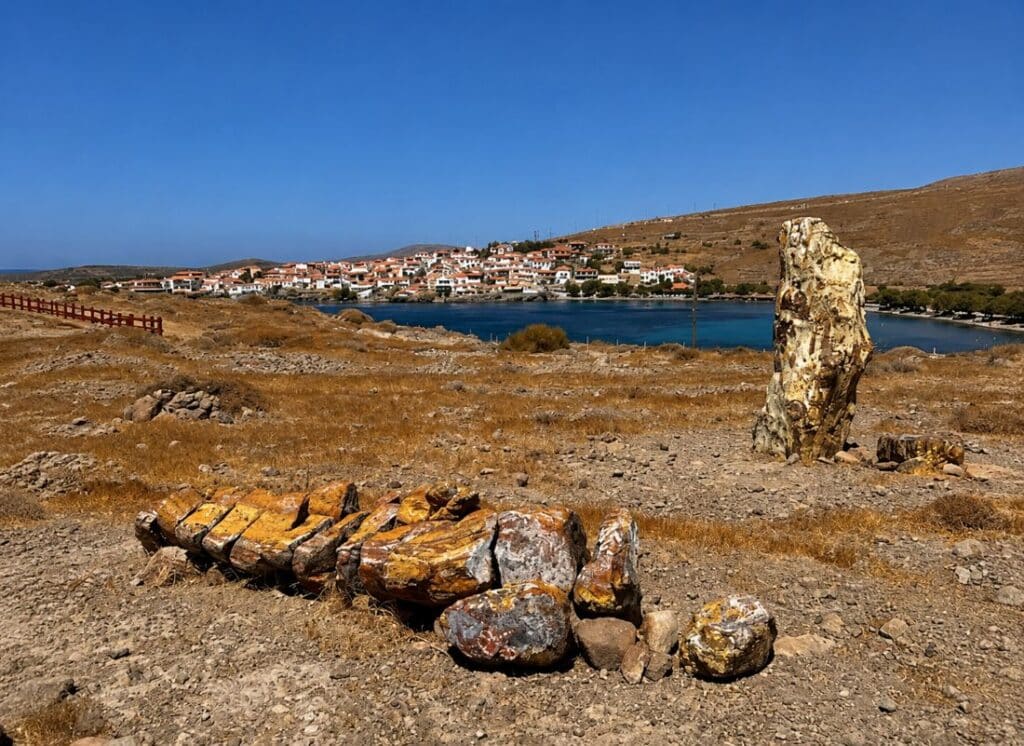
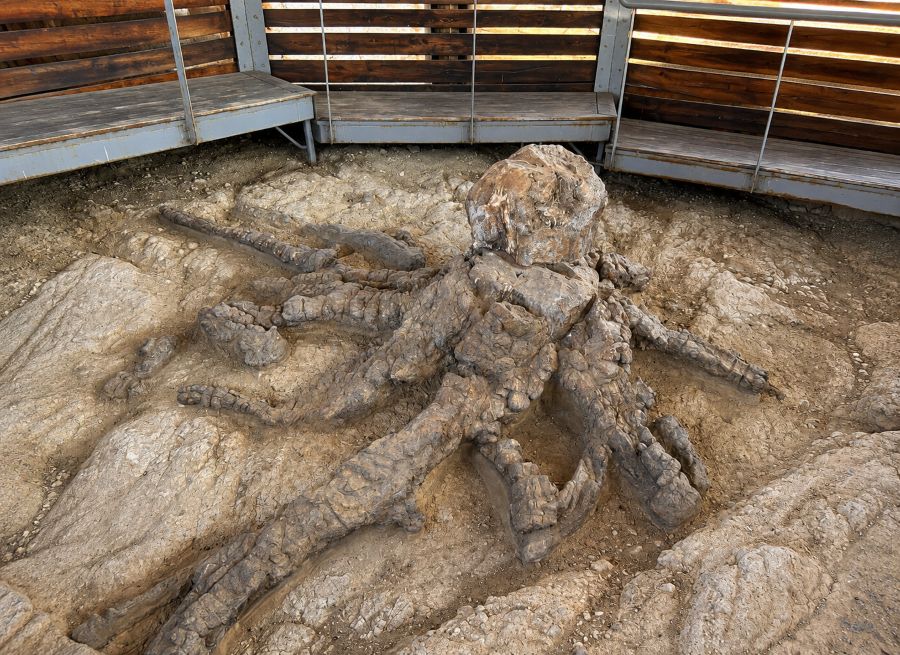
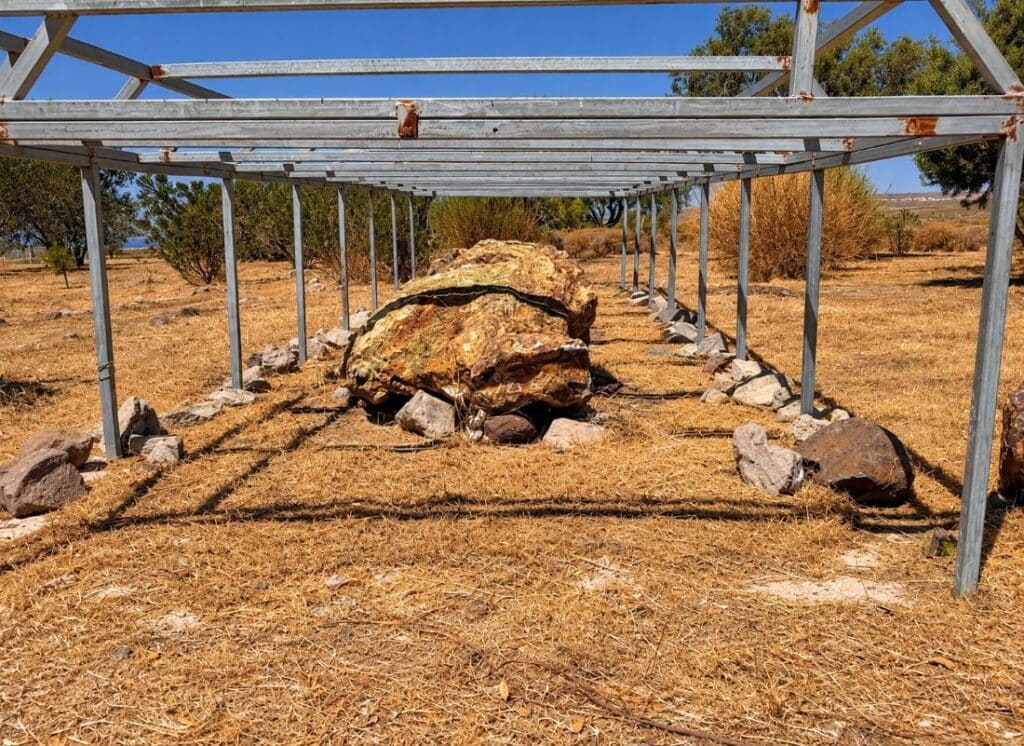
The Petrified Forest of Lesvos, one of the most important fossil ecosystems in the Aegean, contains hundreds of fossilized tree trunks, branches, and root systems preserved within volcanic rocks. The site has long been known for its spectacular standing and fallen trees, but scientists are now looking beyond the trunks to reconstruct the forest itself.
A study published in August 2026 in the journal Review of Palaeobotany and Palynology examines fossil plant remains from the West Akrocheiras area of the Lesvos Petrified Forest. Researchers documented at least 62 fossil plant taxa, with more than 35 representing new records for Lesvos.
The role of geology in shaping the Petrified Forest of Lesvos
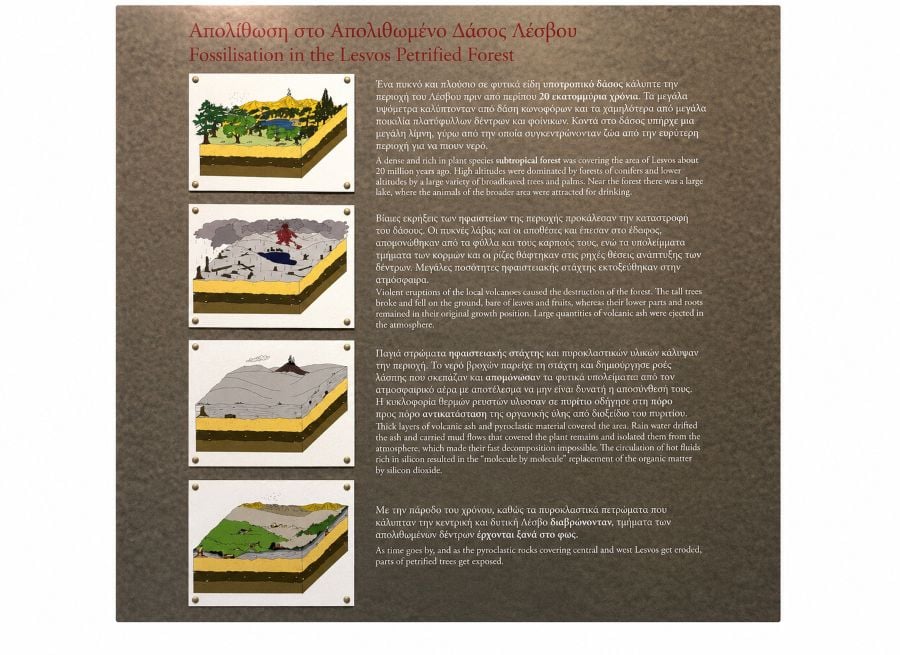
The story of the petrified forest began with a powerful geological event. In the Early Miocene, intense volcanic activity affected western and central Lesvos. Volcanic ash and other pyroclastic material covered vegetation and buried parts of the forest. According to UNESCO’s description of the site, the combination of burial, isolation from atmospheric conditions, and the circulation of silica-rich fluids allowed the original plant material to be replaced by minerals while preserving its structure.
The result is an extraordinary geological record in which tree trunks, roots, branches, leaves, and other plant remains can still be studied millions of years later. The Greek state declared the Petrified Forest a Protected Natural Monument in 1985. The forest is also part of the Lesvos Island UNESCO Global Geopark. This designation is distinct from UNESCO World Heritage status. The Petrified Forest of Lesvos remains on Greece’s Tentative List for possible future World Heritage nomination.
The trees tell only part of the story of the Petrified Forest of Lesvos
For decades, research on the petrified forest on Lesvos focused heavily on its impressive fossilized wood. More than 35 species of fossil wood have been recorded, including conifers and flowering plants. However, wood alone cannot provide a complete picture of an ancient ecosystem. Leaves can reveal much more about the vegetation that once surrounded the trees.
The new study focuses on fossil leaf assemblages from West Akrocheiras, an area that became particularly significant after construction of the Kalloni-Sigri road exposed additional fossil-bearing layers. More than fifteen fossil sites were identified in the area, containing concentrations of petrified trunks, branches, root systems, leaves, and fruits.
Researchers studied the leaf remains systematically over a three-year period to identify the plants that once grew there. Their findings point to a highly diverse Early Miocene vegetation, including two bryophytes, at least five ferns, and more than fifty-five flowering-plant taxa.
What did Lesvos look like 20 million years ago?
The evidence suggests that the ancient landscape was not simply a single uniform forest. Researchers identify vegetation ranging from mixed mesophytic forests to evergreen or subhumid sclerophyllous forest environments. In other words, various parts of the landscape supported different types of vegetation depending on local conditions such as elevation, moisture, and drainage.
Earlier research on fossil leaves from the Akrocheiras area had already identified plant communities associated with lowland and riparian environments and suggested a humid, warm-temperate climate with seasonal shifts between wetter and drier conditions. This makes the ancient forest more than a collection of spectacular petrified trees. It offers a record of an entire landscape.
A landscape shaped by volcanoes
The geological setting is central to understanding why this ancient ecosystem survived in the fossil record. The volcanic rocks covering parts of western Lesvos date to the Oligocene and Miocene, and the fossil-bearing deposits are closely associated with the island’s volcanic history.
The sequence presented at the Natural History Museum of the Lesvos Petrified Forest shows how the landscape changed. Vegetation was buried beneath volcanic material and layers of ash. Pyroclastic deposits accumulated, and erosion later gradually exposed portions of the forest once again. The landscape visible today is therefore partly the result of millions of years of geological change.

The Petrified Forest of Lesvos was also once home to various animals
The fossil record of Lesvos extends beyond plants, and the island has also yielded evidence of large Miocene mammals. Among the most notable is Prodeinotherium bavaricum, an early relative of later elephant-like mammals.
Fossil remains discovered near Gavathas were dated to a minimum age of about 18.4 million years. A scientific study published in 2003 described the Lesvos specimen as the first evidence of deinotheres on the island and discussed it as the earliest known appearance of deinotheres in Europe at the time.
The discovery adds another dimension to the ancient landscape: the forests and wetlands of Early Miocene Lesvos were part of an ecosystem inhabited by large mammals as well as a diverse range of plants.
A forest frozen in geological time
The significance of Lesvos lies in the combination of evidence preserved there. A fossilized trunk can reveal the structure of an individual tree. A root system can show how it grew in ancient soil, while fossil leaves can help identify the plants that surrounded it. Geological layers, meanwhile, can reveal how volcanic activity transformed the landscape. In conjunction, these pieces allow scientists to reconstruct an ecosystem that disappeared millions of years ago.
The latest research contributes considerably to that picture. The West Akrocheiras fossil flora is important precisely because it expands the record beyond the famous petrified trunks and provides a richer basis for understanding the vegetation of Lesvos during the Early Miocene.
Today, erosion continues to expose parts of the ancient forest, revealing preserved remains within the volcanic landscape. For visitors, the result is an unusual sight of tree trunks that look as though they were buried yesterday, scattered across a landscape shaped by forces that operated millions of years ago. The value for scientists, however, is even greater.
The rocks of western Lesvos preserve evidence of a vanished ecosystem, while the leaves, roots, trunks, and animal remains are gradually allowing researchers to reconstruct what that world looked like before the modern Mediterranean landscape existed.

A very different Lesvos
About eighteen million years ago, the landscape that would eventually become Lesvos looked nothing like the isolated Greek island we know today. The region was part of a very different, connected Aegean landmass, shaped by active volcanoes, lakes, and surrounding seas. As forests spread across the volcanic landscape, a warm climate supported a diverse mix of conifers, broad-leaved trees, palms, and other plants.
Much of that vanished world was later buried by volcanic material and preserved in stone, allowing scientists today to reconstruct an ecosystem that existed long before the modern geography of the Aegean took shape.
See all the latest news from Greece and the world at Greekreporter.com. Contact our newsroom to report an update or send your story, photos and videos. Follow GR on Google News and subscribe here to our daily email!

