



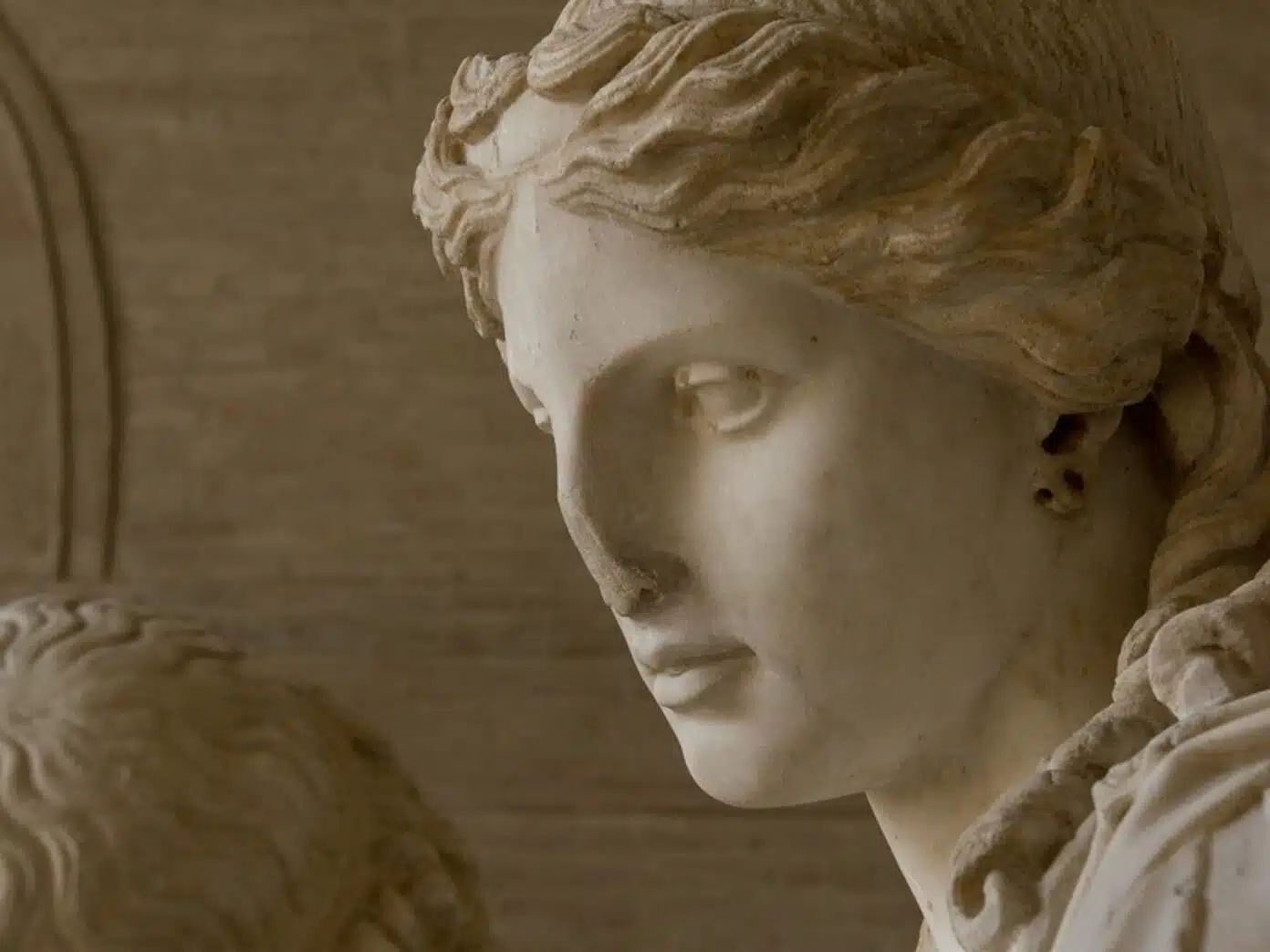
In ancient Greece, the experiences of women varied dramatically from Athens to Sparta. While the prevailing image often portrays women as largely “invisible” in public life, a closer examination reveals a striking contrast between the lives of Athenian and Spartan women.
As archaeologist Evi Pini emphasized in speaking recently to the Athens-Macedonia News Agency (AMNA), it is crucial to avoid broad generalizations about women in ancient Greece, given the vast differences across regions and centuries.
Pini’s research, which focuses on the classical period in Athens and Sparta, illuminates how these two prominent societies treated women in fundamentally distinct ways, revealing that invisibility was far from a universal reality.
Women in ancient Athens: The “invisibles of history”

For the most part, Athenian society aimed for women to be unseen and unheard. The ideal Athenian woman was confined to the home, managing the household and raising legitimate children. Their public presence was minimal, and their lives were largely dictated by their male relatives.
As Pini notes, there were specific primary obstacles women in ancient Athens confronted, as indicated below.
Limited legal rights
Athenian women had no legal right to inherit property directly. Their dowry, while providing some security in case of divorce, remained largely under the control of their husband or father.
If a woman was the sole heir to her father’s property (an epikleros kore), she was legally obligated to marry her closest male relative, even if it meant divorcing her current husband. This highlights a system in which women were often pawns in the preservation of family property and lineage.
Marriage and love
Conventional wisdom, often derived from ancient male writers, suggests that Athenian marriages were devoid of emotional connection, serving primarily the purpose of procreation. Love was supposedly reserved for concubines and courtesans.
However, Pini challenges this stereotype, pointing out the economic impracticality for most men in maintaining multiple partners and citing funerary monuments as evidence of genuine affection between spouses.
High mortality in childbirth
Childbirth posed a significant danger for women, contributing to high female mortality rates. This was a grim reality for women across ancient societies, including Athens.
Sole area of distinction
The primary public role for Athenian women was in priesthood. Their participation in religious ceremonies and rituals was crucial. Beyond this, opportunities for distinction were virtually nonexistent.
Women in ancient Athens and Sparta: A striking contrast

According to Greek archaeologists, in stark contrast to Athens, Spartan society granted women a much more prominent and respected position.
While not entirely equal to men, their social status, legal rights, and public recognition were remarkably progressive for the time.
High social status and public honor
Spartan women, especially mothers, held high social standing and were not shy about expressing their opinions publicly. They were even honored with public praise, a stark difference from the Athenian ideal of female silence.
Numerous “Lakaean aphorisms” attributed to Spartan women attest to their wit and influence.
Economic power and inheritance
Spartan women possessed significant economic power. Unlike their Athenian counterparts, they could inherit property from their parents and manage it independently. Due to high male mortality in warfare, Spartan women controlled approximately two-fifths of the land by the 4th century BC.
This economic independence was so unusual that other Greeks, including Aristotle, reportedly viewed Spartans as “womanizers” because of it, misinterpreting their women’s power.
Physical education and health
Spartans prioritized the physical training of girls from a young age, believing that strong bodies would lead to healthier offspring who could better cope with the rigors of childbirth.
They also married their daughters off at an older age (18-20) than Athenians (15-16), considering physical maturity beneficial for motherhood.
Absence of dowry and adultery laws
Spartan law prohibited dowries, ensuring that even less fortunate girls could marry. Furthermore, the concept of adultery as a punishable offense largely didn’t exist in the same way as in Athens.
Consensual extramarital relations, often for the purpose of procreation and to ensure strong offspring for the state, were acceptable and not kept secret. While secret affairs might have occurred, they didn’t lead to the severe penalties and social ostracism faced by Athenian women caught committing adultery.
“Secret” weddings
Spartan weddings involved a ritualistic “secret abduction” of the bride, a haircut, and disguise.
While Plutarch offered a practical, though likely inaccurate, explanation for these “secret” marriages (testing for offspring), Pini suggests they were more likely ancient customs signifying a transition from one state to another, a young woman “disappearing” to reappear as a married woman with a new identity.
Distinction in arts and philosophy
Beyond their domestic roles, Spartan women, alongside women from other Dorian and Aeolian cities and colonies, could achieve distinction as poets and philosophers.
Stereotypes about women in ancient Athens and Sparta to break down
Evi Pini’s insights reveal several crucial stereotypes pertaining to women in Greek antiquity that need to be challenged, as indicated below.
The monolithic “ancient Greek woman”
It’s a significant oversimplification to generalize about “women in antiquity.” The vast differences between Athenian and Spartan societies, among others, demonstrate the diverse realities of women’s lives across different regions and periods. The notion of a single, universal experience for women in ancient Greece is inaccurate.
Absence of marital love
The stereotype that emotional bonds were absent in Athenian marriages, with love reserved for concubines and courtesans, is largely unfounded. Economic realities for most Athenians would have made supporting multiple partners impossible.
Furthermore, evidence from funerary monuments suggests genuine affection and grief existed between spouses.
Universal invisibility
While Athenian women were indeed largely “invisible” in public life, Spartan women were far from it.
Their economic power, social standing, and public voice demonstrate that invisibility was not a universal experience for women in all Greek societies.
Adultery as a universal sin
The draconian Athenian laws surrounding adultery, including the husband’s right to kill the adulterer, are often projected onto all of Greek antiquity.
Sparta’s approach, where consensual extramarital relations for procreation were accepted and “adultery” as a concept barely existed, shows a dramatically different cultural norm.
By examining the nuances of different Greek city-states, particularly the contrasting experiences of Athenian and Spartan women, we gain a much richer and more accurate understanding of women’s roles, rights, and visibility in Greek antiquity, dismantling simplistic and often misleading generalizations.
(With information from AMNA)
Related: What Did Everyday Life in Ancient Athens Really Look Like?
See all the latest news from Greece and the world at Greekreporter.com. Contact our newsroom to report an update or send your story, photos and videos. Follow GR on Google News and subscribe here to our daily email!

