



Children in Ancient Greece played with sophisticated figurines that, much like modern Barbies, reflected the society and aspirations of their time.
These “Barbies of the ancient world”—terracotta dolls known as plangones or korai—were more than mere toys; they were cultural artifacts deeply intertwined with education, ritual, and the unfolding lives of young Greek girls.
Crafted primarily from terracotta, these dolls were often surprisingly elaborate. While many basic figures exist, the more detailed examples, such as the articulated woman with a rolling pin from Rhodes (c. 450 BC), showcase remarkable craftsmanship. This particular doll, with its movable waist and shoulders, perfectly mimicked the domestic task of kneading dough, offering a tangible lesson on household duties.
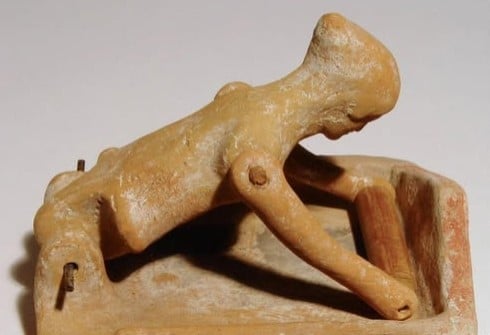
The figure is articulated at both the waist and the shoulders, allowing the woman to lean up and down and push the rolling pin back and forth across the tray, realistically imitating the act of kneading dough. While the original rolling pin was likely made of wood, the one seen in many museum photographs is often a modern replacement, included to demonstrate how the toy functioned.
The figurine still bears traces of its original white slip and red and black pigments, a reminder that these ancient objects were once vividly colored. It stands approximately 11.4 centimeters (almost 4.5 inches) high. Its presence in a burial site suggests it may have been a “votive” object or a cherished possession placed in a grave to protect the deceased.
Other dolls featured intricate hairstyles, painted facial features, and even remnants of textiles, indicating they were once adorned with miniature clothing, much like a modern fashion doll.
Barbies in Ancient Greece: Their functional and symbolic meanings
While often described as toys, these figurines served multiple roles in Ancient Greek society. Many scholars believe such dolls, known as plangones or korai, had an educational purpose. They introduced young girls to domestic roles and the “obligations of a woman,” which included food preparation.
Their function extended beyond simple play. For young girls in Ancient Greece, dolls were vital tools for socialization and education. Through play, girls could mimic adult roles—preparing for their future as wives and mothers. They practiced dressing their dolls, arranging their hair, and enacting scenes of domestic life, internalizing the skills and expectations required of women in their society.
The lifespan of a Greek doll was often brief but profoundly meaningful. It was customary for girls to dedicate their dolls to goddesses—most commonly Artemis, the patroness of young women and childbirth—on the eve of their marriage. This ritual marked the symbolic transition from childhood to adulthood and from maidenhood to marriage. By offering their cherished toys, girls formally renounced their childhood and embraced their new social identity and responsibilities. These dedications were often made at sanctuaries, transforming mundane objects of play into sacred offerings.
Archaeological finds confirm the widespread presence of these dolls across the Greek world, from mainland Greece to the islands and colonies. Many have been discovered in children’s graves, highlighting their profound personal value. In some cases, their presence suggests the tragic loss of a child who never reached the age of dedication, indicating that these cherished objects accompanied the deceased into the afterlife.
Related: Spells, Charms, Erotic Dolls: Love Magic in Ancient Greece and Rome
See all the latest news from Greece and the world at Greekreporter.com. Contact our newsroom to report an update or send your story, photos and videos. Follow GR on Google News and subscribe here to our daily email!

