



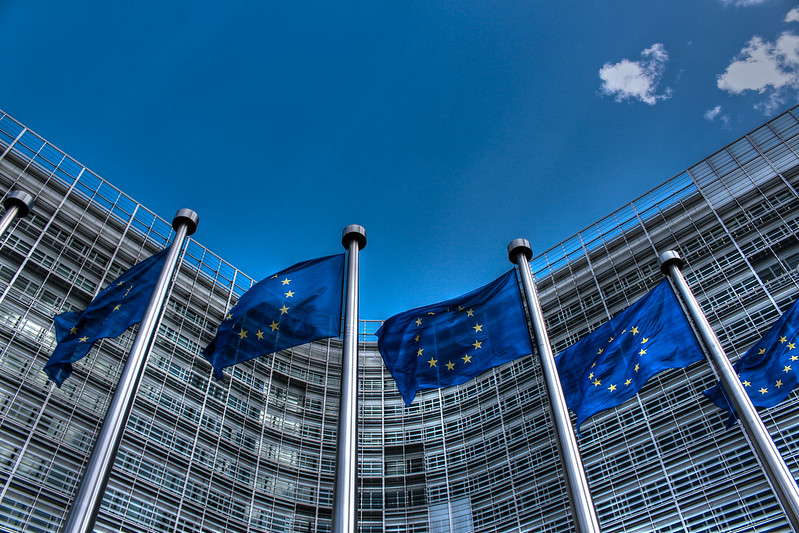
EU leaders reached a breakthrough agreement to provide a joint loan on international capital markets to support the financial needs of Ukraine, estimated at €90 billion ($105.4 billion), over the next two years.
The decision was made during an intense European Council summit in Brussels after a rival proposal to fund a “reparations loan” using seized Russian sovereign assets collapsed due to legal and financial concerns.
EU agreement on joint Ukraine loan a “major victory”
The agreement utilizes the “headroom” of the EU budget, allowing the bloc to borrow at favorable rates without requiring immediate direct contributions from national budgets. Antonio Costa, President of the European Council, spoke highly of the deal: “We delivered on our commitments,” he stated, noting that the timing is critical as Europe seeks a pivotal role in US-led peace negotiations.
Ursula von der Leyen, President of the European Commission, described the agreement as a “major victory” despite her initial preference for using the €210 billion ($245.9 billion) in frozen Russian assets.
Kyriakos Mitsotakis, the Greek Prime Minister, supported the move, telling reporters that the solution has “no practical fiscal impact” on member states while sending a clear signal of European resolve.
How the EU’s Ukraine deal works
After sixteen hours of negotiations, the Council finalized the following framework:
- Joint borrowing: The EU will raise €90 billion on capital markets, guaranteed by the collective EU budget.
- Repayment terms: Ukraine is only required to repay the principal if and when Russia pays war reparations.
- The “frozen” lever: Russian assets will remain immobilized. They may eventually be used to settle the debt if Moscow refuses to pay for damages caused by the invasion.
- The Belgian obstacle. The original plan to use the €185 billion in Russian assets held at the Euroclear depository in Belgium failed. Belgian Prime Minister Bart De Wever demanded “unlimited” guarantees from other EU states to protect his country from Russian legal retaliation. Faced with this maximalist demand, France and Italy proposed the joint-borrowing alternative to avoid a total collapse of the summit.
Winners and losers
While the deal secures Ukraine’s solvency through 2027, it represents a political compromise for German Chancellor Friedrich Merz and von der Leyen, who had both campaigned heavily for the asset-backed loan. Conversely, Hungary, Slovakia, and the Czech Republic secured an “opt-out” from financial obligations, allowing the plan to proceed without their veto.
“The absence of a decision would have been catastrophic,” noted French President Emmanuel Macron, emphasizing that European unity remained intact despite the grueling process.
See all the latest news from Greece and the world at Greekreporter.com. Contact our newsroom to report an update or send your story, photos and videos. Follow GR on Google News and subscribe here to our daily email!

