



Digital tools have changed how people learn, travel, and communicate. Tasks once handled through practice and patience now rely on software. As automation grows, everyday human skills are quietly disappearing from common use in the modern world.
Educators say this shift reflects the speed of modern life. But researchers caution that as these abilities disappear, parts of cultural knowledge and independent thinking may fade with them.
Cursive writing skills
Cursive writing began thousands of years ago as a faster way to write with ink and quills. In the United States, it later became a classroom standard. The elegant loops of Spencerian and Palmer handwriting shaped personal letters, legal notes, and founding papers for more than a century.
Mainstream education generally dismisses cursive because it is not “useful”.
Meanwhile every classical school I have visited stresses cursive. They believe cursive matters because beauty matters. They understand that thinking means making connections and writing in cursive is… pic.twitter.com/yPd1uMEbHk
— Jeremy Wayne Tate (@JeremyTate41) January 11, 2025
Yet keyboards have replaced pens in most schools. Many students can barely sign their names. Historians worry handwritten archives will become harder to read. Psychologists say cursive helps build hand strength and memory by linking muscle movement to language. Without it, they fear a growing gap between people and their own written history.
Analog clock reading
Telling time on a circular clock once taught children how to understand the movement of minutes and hours. The placement of hands reinforced mathematical concepts like fractions, estimation, and the idea that time flows continuously.
According to a YouGov poll, only 43% of young people aged 18–29 can read an analog clock instantly.
Follow: @AFpost pic.twitter.com/Lx61xZVsEP
— AF Post (@AFpost) August 30, 2025
Digital clocks now dominate phones, laptops, and classroom walls. Teachers report that students struggle to understand simple time phrases like “half past.” Researchers say the loss is not only mathematical. The sweeping motion of a clock hand helps children visualize time as something passing — a concept digital screens fail to show.
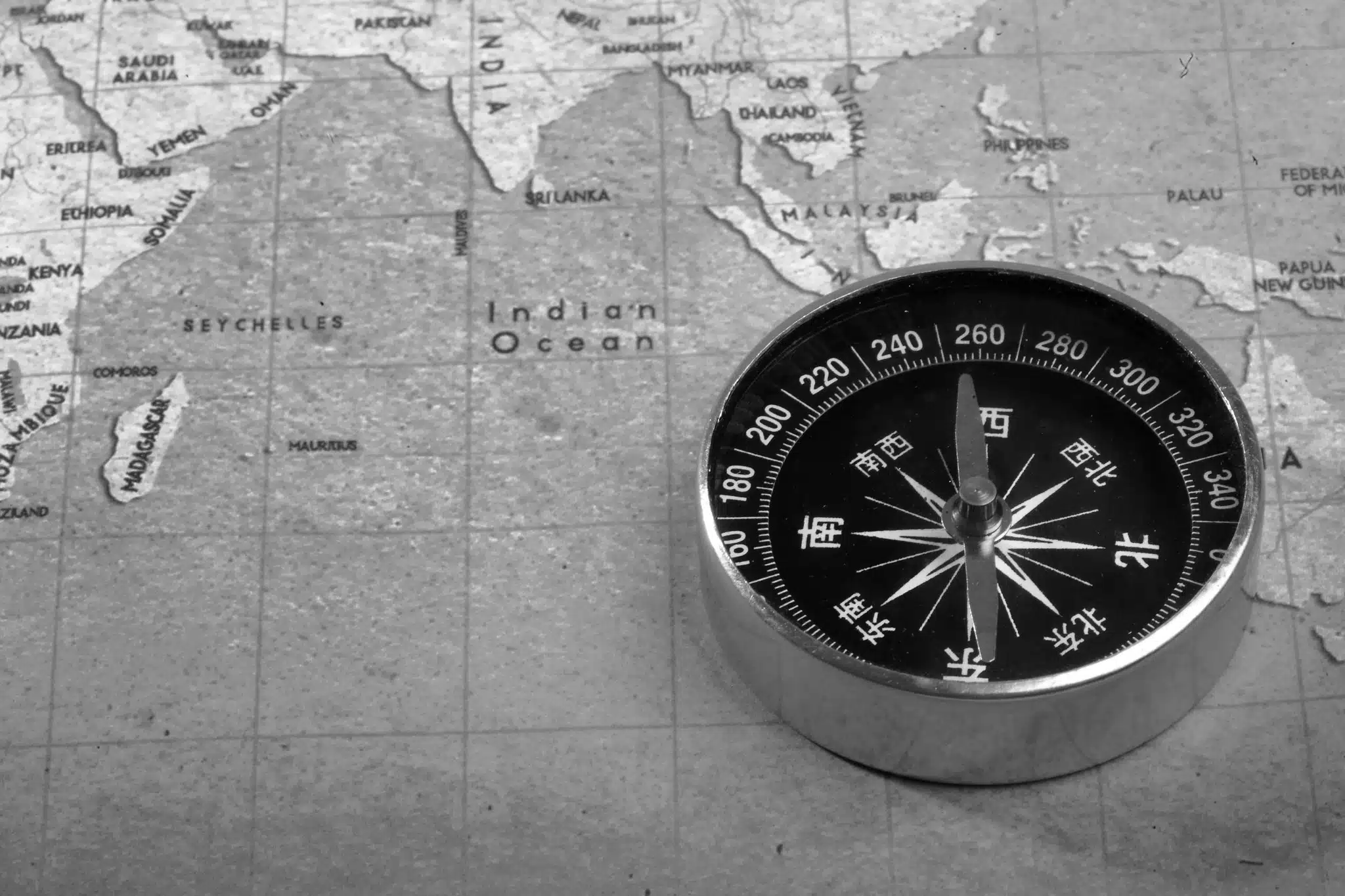
Declining use of physical maps
Paper maps required people to plan. They pictured terrain, counted miles, and tracked progress. Navigating this way built spatial memory and confidence.
Turn-by-turn apps now make those decisions automatically. Drivers rely on a voice rather than road signs or surroundings. Studies suggest this reduces activity in the brain’s hippocampus, an area linked to orientation and memory.
When a device dies or service cuts out, many find themselves unable to continue. Experts warn that the skill gap could matter most during emergencies or rural travel, where help is not always close.
Phone number memory
Not long ago, people could recite numbers for relatives, friends, doctors, and neighbors. It provided quick contact when needed.
🤔 No kidding! The only phone number I know off the top of my head is my parent’s number. Everyone else, including family…I have to go to Contacts. 🙄 pic.twitter.com/DbkhDRpND8
— ❤️🔥 𝓓𝓪𝓻 ❤️🔥 (@DameScorpio) June 29, 2025
Today, most numbers sit inside a device’s contact list. Many young people know only their own. Neuroscientists say this “outsourcing” of memory weakens the brain’s recall abilities. In crises — a lost phone, a dead battery — reaching someone without that stored knowledge becomes far more difficult.
Mental math
Mental arithmetic once helped people manage money, calculate change, or check a receipt for errors. It encouraged reasoning and attention to detail.
In 1895, Nikolay Bogdanov-Belsky painted the famous: "Mental Arithmetic. In the Public School of S. Rachinsky." The problem on the blackboard is (10²+11²+12²+13²+14²)/365, can you find a way to solve it with mental arithmetic? pic.twitter.com/PjhdQf4MAU
— Fermat's Library (@fermatslibrary) July 28, 2018
Apps now perform even the simplest equations. Fewer people calculate percentages or divide costs on their own. Economists say weak mental math can lead to overspending and reduced financial confidence. They describe the skill as a form of everyday protection — one that helps people avoid costly mistakes.
Manual car driving
Manual transmissions once taught drivers how engines respond to speed, weight, and traction. The skill offered control in snow, steep hills, or sudden stops.
But automatic and electric vehicles now dominate car lots. Many teens never learn to shift gears. Some road safety experts say this dependence may leave drivers unprepared if onboard systems malfunction. They note that knowing how a vehicle works can help during high-pressure moments when technology cannot assist.
Sewing skills
Sewing used to be a routine part of family life. Patching holes, fixing hems, and reattaching buttons extended the life of clothing.
Just found my sewing sample folder from uni with the list of every basic skill we learned in 1st year. Maybe someone will find this helpful to see what skills they should try! pic.twitter.com/94soLp7tM9
— Hanging by a Thread 🧵🪡 (@mistresstailor) January 5, 2024
Fast fashion encourages replacing clothes instead of repairing them. Many households no longer own a sewing kit. Tailors report fewer customers as skills decline. Environmental advocates warn that tossing garments after minor damage fuels the global rise of textile waste, a major source of landfill pollution.
Using radio communication
Radios once provided weather updates, music, sports, and emergency alerts without the internet. Families kept battery-powered models on hand for blackouts or storms.
Today, many people rely entirely on smartphones. Emergency agencies still advise owning a basic radio, warning that Wi-Fi and cell towers can fail during disasters. Yet younger generations often don’t know how to tune a frequency or operate a manual device. The ability to communicate offline is fading just as climate risks rise.
Morse code knowledge
Morse code once connected continents across telegraph wires. At sea and during wars, its simple dot-and-dash patterns sent life-saving messages. The universal SOS signal became a symbol of urgent need.
In 1966, during the Vietnam War, a U.S. Navy pilot, while being filmed by his captors and instructed to say he had been treated well, cleverly blinked in Morse code to convey a warning message. pic.twitter.com/PJkc8Wgyz0
— Historic Vids (@historyinmemes) September 5, 2024
Now, only dedicated radio hobbyists maintain the craft. Several countries have removed Morse code training requirements in the aviation and naval fields. A once-essential language of rescue is drifting into silence.
A changing skill set
Technology continues to improve comfort and access. But researchers say the steady decline in these skills highlights a new challenge: maintaining self-reliance in a world that automates everything. The tools of today may solve problems instantly — until they stop working. The question experts pose is simple: When the screen goes dark, how many skills remain?
See all the latest news from Greece and the world at Greekreporter.com. Contact our newsroom to report an update or send your story, photos and videos. Follow GR on Google News and subscribe here to our daily email!

