



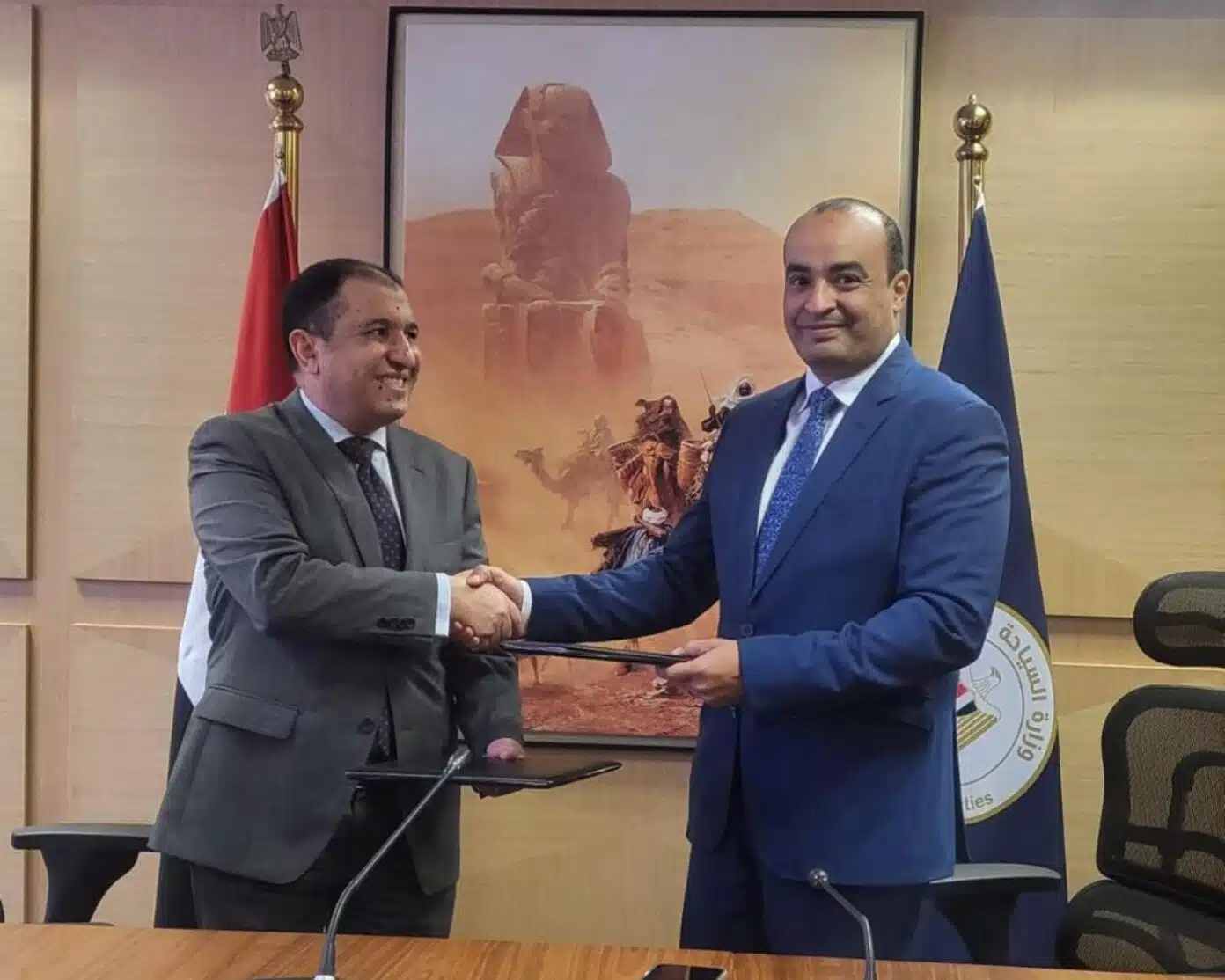
Egypt has taken a major step to protect its archaeological lands through a new partnership between the Supreme Council of Antiquities and the Real Estate Tax Authority.
The agreement authorizes the tax authority to collect fees for illegal or unauthorized use of state-owned archaeological lands on behalf of the council — a move aimed at tightening oversight and ensuring public assets generate fair revenue for the state.
The protocol, signed by Supreme Council of Antiquities Secretary-General Mohamed Ismail Khaled and Real Estate Tax Authority Head Ahmed El-Sadeq, is designed to streamline the collection of state dues related to encroachments and bring greater accountability to how Egypt manages its heritage sites and surrounding lands.
Khaled said the agreement marks a key milestone in strengthening coordination between government bodies and enhancing financial discipline in the management of national assets. He explained that the initiative will help the council make better use of its resources and support its development plans while aligning with the broader national strategy to safeguard public property.
Strengthening institutional coordination and financial oversight
He added that the partnership follows Egypt’s wider economic and administrative reforms, including directives from the presidency to maximize the return from public assets and ensure stronger cooperation among state institutions.
This, he noted, will ultimately serve the public interest and improve efficiency in collecting state revenues tied to archaeological land use.
From the antiquities side, Hesham El-Leithy, head of the Department for the Preservation and Registration of Egyptian Antiquities, noted that under the new framework, the Real Estate Tax Authority will collect usage fees from individuals or entities occupying archaeological lands — even in cases where occupation occurs without legal authorization.
The fees will be determined by the Supreme Council of Antiquities, ensuring consistency and fairness in how dues are assessed.
Enhancing accountability and protecting public assets
El-Leithy said the protocol also calls for the creation of a joint technical, financial, and legal committee to monitor implementation, set work priorities, and resolve any obstacles that may arise. The committee will act as a permanent liaison between the two institutions to ensure that the agreement’s objectives are met transparently and efficiently.
Present at the signing ceremony were senior officials from both sides, including Mohamed Abdel-Badie, head of the Egyptian Antiquities Sector, and Saber Ghazi, director general of the Violations Department at the council, alongside Fouad Aboul-Hadid Mohamed Ayyoub, director general of the Department of Collection, Seizure, and Dues at the tax authority.
The new cooperation reflects Egypt’s growing commitment to protecting its archaeological lands while ensuring that state-owned assets contribute effectively to national development.
See all the latest news from Greece and the world at Greekreporter.com. Contact our newsroom to report an update or send your story, photos and videos. Follow GR on Google News and subscribe here to our daily email!

