



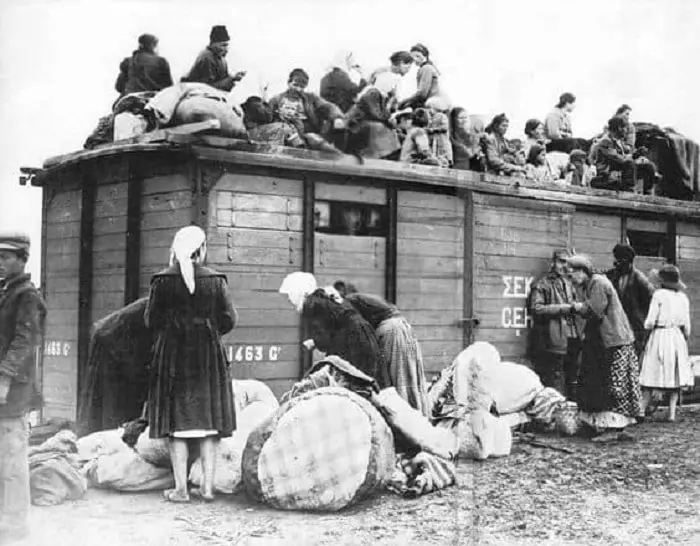
For the first time, Israeli Prime Minister Benjamin Netanyahu publicly recognized the genocide committed by the Ottoman Empire against Armenians, Assyrians, and Greeks in the early 20th century.
His remarks came during an interview on Tuesday, August 26, with Patrick Bet-David, host of the Valuetainment media channel known for high-profile political and business interviews, after he asked why Israel had never formally acknowledged the atrocity. Netanyahu initially suggested that the Knesset, the Israeli Parliament, had already passed a resolution, though in reality no such resolution exists.
When pressed further, he added: “I just did. There you go.” The exchange marked a striking departure from Israel’s long-standing reluctance to address the issue directly.
Historical reluctance and diplomatic constraints
Israel has historically refrained from recognizing the genocide, primarily out of concern for its relationship with Turkey.
Ankara continues to deny the genocide, insisting that the mass killings and deportations during World War I were not systematic ethnic cleansing. Successive Israeli governments have sought to avoid a diplomatic rupture with a key regional actor.
Yet, relations between Jerusalem and Ankara are now at their lowest point in decades. Despite restoring formal diplomatic ties in 2022, the war in Gaza has reignited tensions.
Turkey’s response and regional tensions
Turkey has strongly condemned Israel’s military actions in Gaza, labeling them “war crimes” and calling on Muslim-majority nations to coordinate a collective response. Beyond rhetoric, Ankara has imposed trade restrictions and embargoes on multiple categories of goods bound for Israel, linking the removal of these measures to a permanent cease-fire and the provision of unrestricted humanitarian aid to Gaza.
The rivalry extends beyond Gaza. In Syria, where Turkey maintains influence in the north, Israel views Ankara’s presence with increasing suspicion. The political rhetoric has turned increasingly hostile: Turkish President Recep Tayyip Erdogan has compared Netanyahu’s government to a Nazi regime, even likening the Israeli leader to Adolf Hitler.
The positions of Netanyahu and the Knesset on the genocides
Despite Netanyahu’s declaration, the Israeli Parliament has not officially recognized the genocide through legislation.
Since 2011, the Knesset has periodically held debates and committee sessions to commemorate the victims of the Armenian genocide, often supported by prominent figures such as former Knesset Speaker Reuven Rivlin.
However, these initiatives have never culminated in an official resolution. Netanyahu’s statement may signal a new political reality—yet without parliamentary approval, Israel’s stance remains symbolic rather than institutional.
See all the latest news from Greece and the world at Greekreporter.com. Contact our newsroom to report an update or send your story, photos and videos. Follow GR on Google News and subscribe here to our daily email!

