



Numerous Greek scientists made astounding finds in 2024, and others have earned global admiration for projects already accomplished or ones they are about to embark on.
Greek Reporter looks back at some notable Greek scientists and their work in 2024.

Winner of the Nobel Prize in Chemistry
Greek Cypriot Demis Hassabis was among the three scientists who won the Nobel Prize in Chemistry for determining the structure of proteins using artificial intelligence.
Hassabis was honored with the prestigious award along with his colleagues David Baker and John Jumper.
The Royal Swedish Academy of Sciences announced half of the prize to Baker “for computational protein design” and the other half jointly to Hassabis and Jumper “for protein structure prediction.”
Baker works at the University of Washington in Seattle in the United States, while Hassabis and Jumper both work at Google Deepmind in London.
The laureates revealed protein secrets through computing and artificial intelligence, the committee said, noting that “chemists have long dreamed of fully understanding and mastering the chemical tools of life—proteins.”
While Hassabis and Jumper used artificial intelligence “to predict the structure of almost all known proteins,” Baker “has learned how to master life’s building blocks and create entirely new [ones].”
Describing the potential of their discoveries as “enormous” and “astounding,” the committee said it could lead to the more rapid development of vaccines and a greener chemical industry “to name just a few applications that are for the greatest benefit of humankind.”
Unraveling the origins of earth’s largest ocean current
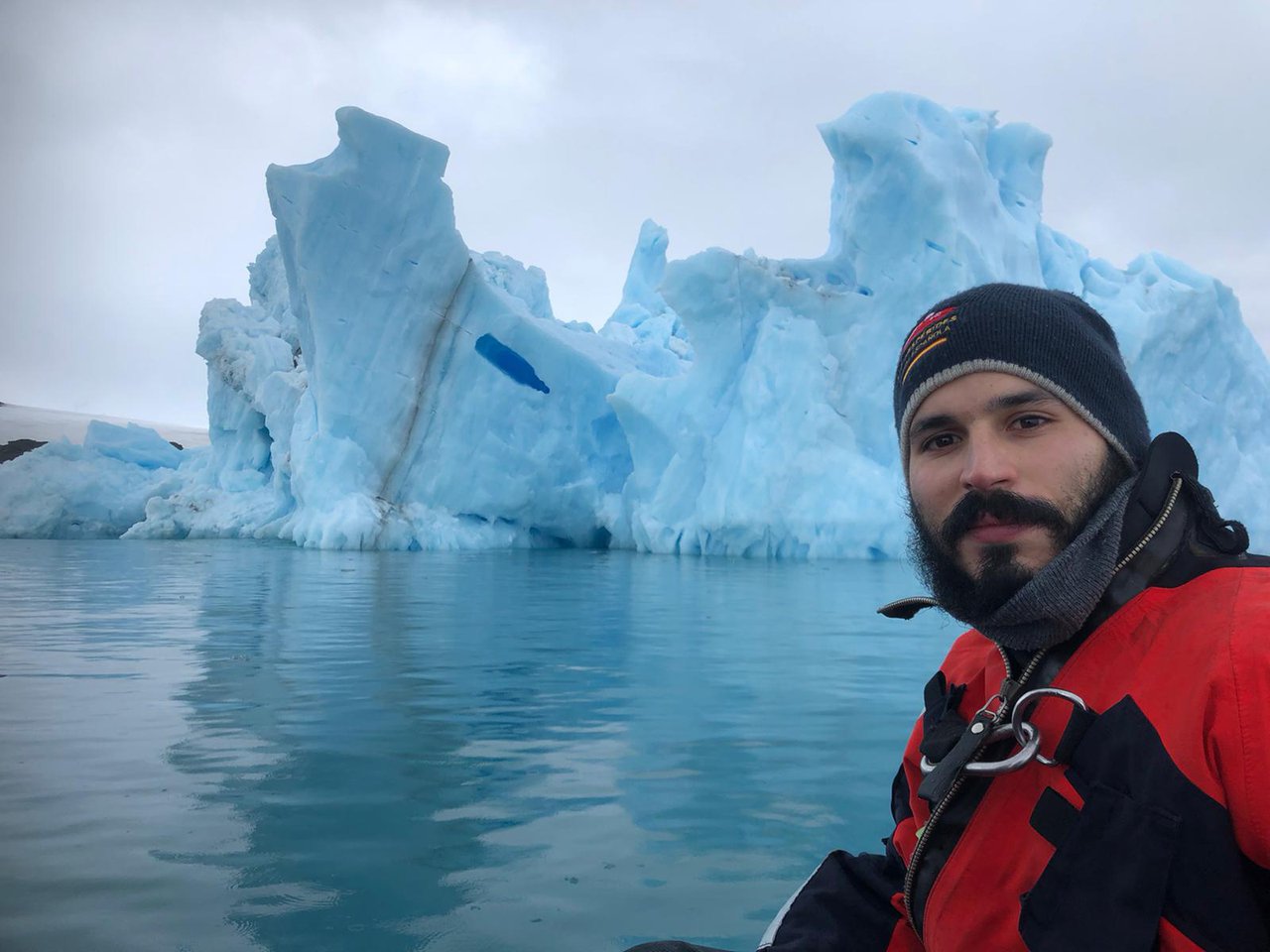
Greek scientist Dr. Dimitris Evangelinos and his team at Imperial College London discovered that the largest and strongest ocean current on Earth didn’t start flowing until ten million years ago.
The discovery sheds light on the ancient history of our planet’s oceans and challenges our previous understanding of the Antarctic Circumpolar Current (ACC), believed to be over thirty million years old.
The ACC, which acts as an “engine” by regulating our planet’s climate and temperature, was thought to be a key player in cooling Antarctica and building up its ice sheet around thirty-four million years ago.
However, new findings challenge this theory and completely alter our understanding of how Antarctica’s ice sheet developed in the past, as well as what this might mean for the future as the climate changes.
Evangelinos of the Department of Earth Science and Engineering (ESE) at Imperial, said:
“Our findings fundamentally change how we view the interplay between this giant ocean current and Antarctica’s ice sheets throughout Earth’s history. As we face today’s climate challenges, understanding this interaction becomes more crucial than ever.”
The study, published in Nature Geoscience, was led by an international team involving researchers in the UK, Spain, and France.

Nazi victims executed 83 years ago on Crete, identified
Greek scientists identified eighteen people who were executed by the Nazis on Crete through DNA analysis. The study was published in the Forensic Science International.
For humanitarian purposes, Greek scientists identified the skulls of the victims, following a request from the local community of Adele.
The molecular identification of historical human remains via ancient DNA approaches and low-coverage whole genome sequencing has only recently been introduced. The scientists performed genome skimming on the living relatives of the victims, as well as high-throughput historical DNA analysis on the skulls to infer the kinship degrees among the victims via genetic relatedness analyses.
They also conducted targeted anthropological analysis to complete the identification of all victims. The study was initiated by Georgios Alexandrakis, a professor emeritus of the University of Miami and former president of the Senate. DNA analysis was conducted at the Institute of Molecular Biology and Biotechnology of the Foundation for Research and Technology Hellas (IMBB-FORTH).
In the Battle of Crete during the World War II occupation of Greece, the German forces faced substantial civilian resistance.
The inhabitants of Adele, a prosperous lowland village in the northeastern part of the Rethymnon regional unit, resisted fiercely and had formed an armed resistance group. As a consequence, the German forces surrounded the village on June 2, 1941 and arrested eighteen male civilians (including two fathers with their adult sons, two couples of brothers, as well as two adolescents), from the orchards and the streets of Adele.
They were given shovels and led to the site of Sarakina. According to inhabitants of the present-day community of Adele, they had to dig their own grave, that is, a massive death pit before being executed on the same day. They were found by their families several days later.

Scientists bring millions-year-old petrified forest to light
A new petrified ancient forest was brought to light in the area of Kerasia in northern Evia, Greek scientists announced in May.
Trees have been buried by sediment over millions of years and their organic materials have slowly been replaced by minerals, most commonly silica. The result was petrified wood in the form of a perfect replica of the original tree. The forest dates to the Miocene epoch, a period in Earth’s history that lasted from about 23.03 million years ago to 5.33 million years ago.
Excavation research in northern Evia began in October 2022. It has brought to light a large number of fossilized trunks and leafy horizons. In particular, the excavations are being carried out in the fossil-bearing area of 1.7 hectares, which belongs to the Region of Central Greece and has been fenced off.
Mystery of Hindenburg disaster solved
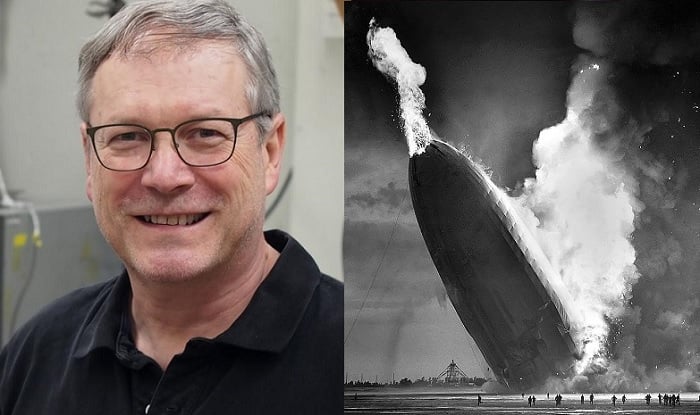
Caltech’s Konstantinos Giapis, a professor of chemical engineering, solved the Hindenburg disaster, the airship accident that occurred in 1937 in New Jersey in the United States. The airship, filled with hydrogen, went down in flames while attempting to dock. There were 35 fatalities among the 97 people on board and one on the ground. Giapis recreated the ship’s final moments and unraveled its secrets for NOVA, the popular PBS science television show.
The Greek scientist, who obtained his diploma from the National Technical University of Athens in 1984 and completed his PhD studies at the University of Minnesota in 1989, began looking into historical records of the accident and soon realized that no one prior had undertaken any form of research to identify the cause of the incident.
What has always been known is that the zeppelin, which was designed by the Zeppelin Company, a German firm known for its large and luxurious airships, contained seven million cubic feet of flammable hydrogen.
Imagine a cigar-shaped balloon as large as a skyscraper filled with explosive gas. Combine that hydrogen with oxygen from the air and a source of ignition, and you “literally [have] a bomb,” Giapis said, according to an interview with Caltech.
The key but long-unanswered question was how the fire even began. The Greek scientist built a model of a portion of the zeppelin’s outer surface in his laboratory on the Caltech campus in his attempt to gain insight.
“Hydrogen was leaking at one specific location in this humongous thing. If there is a spark somewhere else on the ship, there is no way you would ignite a leak hundreds of feet away. A charge could move on wet skin over short distances, but doing that from the front of the airship all the way to the back is more difficult,” he said. “So how did the spark find this leak?”
Any place where a part of the frame was in close proximity to the skin would have formed a capacitor, and there were hundreds of these places all over the ship, Giapis says.
“That means the giant capacitor was actually composed of multiple smaller capacitors, each capable of creating its own spark. So I believe there were multiple sparks happening all over the ship, including where the leak was,” he concluded.

Embarking on a historic mission to Antarctica
For the first time ever, Greece is participating in a mission to Antarctica and has dispatched a team of scientists to study a wide range of matters of interest in the unique environment. The goal is to obtain valuable data for understanding Earth’s systems.
The Greek scientists are participating in the next Bulgarian expedition and traveling with the research vessel “Saints Cyril and Methodius,” said the president of the non-governmental Hellenic Polar Zones Society, Simeon Konstantinidis.
“This is a big step for us towards the South Pole because it is the first time Greece will send its scientists,” Konstantinidis had explained.
He added that the organization’s plans also include the construction of a weather station on the frozen continent, which will probably happen next year in 2025.
One of the scientists traveling to Antarctica this year on the Bulgarian ship is a professor of the University of Athens who works in astrophysics. Konstantinidis explained that he will be making astronomical observations and measurements.
On the Greek side, the second expert is a professor from the Technical University of Crete who will conduct psychological tests for people living in isolated regions to check for signs of depression. Videos explicitly produced to support individuals in isolated environments will be utilized, and the magnetism emitted by particular people when they experience various emotions will be measured.
“When they return, we will learn from their experience and be able to organize more expeditions. We hope to be able to develop this cooperation between the Balkan countries and Europe and be able to send scientists from Greece every year,” said Konstantinidis.
See all the latest news from Greece and the world at Greekreporter.com. Contact our newsroom to report an update or send your story, photos and videos. Follow GR on Google News and subscribe here to our daily email!

