



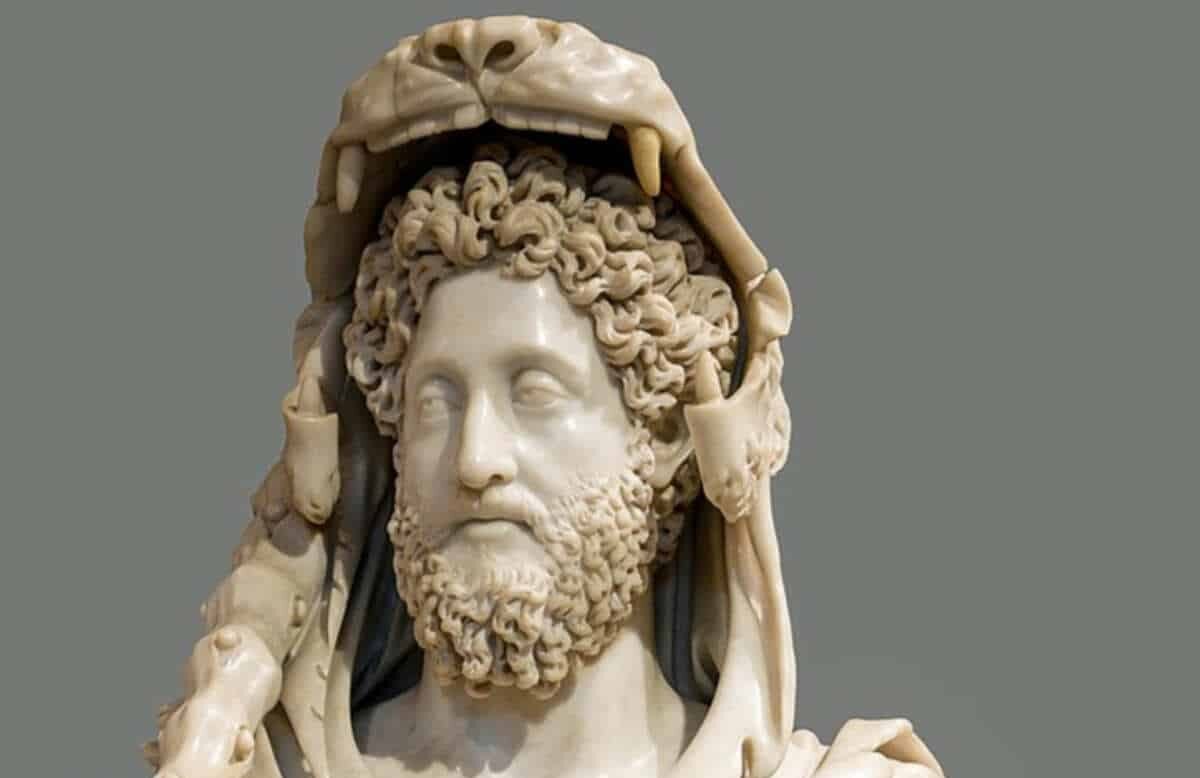
Commodus, the son of Emperor Marcus Aurelius, ruled Rome from 180 to 192 AD and, unlike his father—who earned a reputation for wisdom and stability—Commodus became infamous for his erratic behavior, cruelty, and obsession with gladiatorial games.
Ancient historians such as Cassius Dio labeled him “mad,” and his actions spread distrust and fear throughout the empire.
Commodus, son of Marcus Aurelius and ruler of Rome
Born in 161 AD, Commodus grew up surrounded by wealth, power, and military influence. His father ensured he received the best education, training in rhetoric, philosophy, and statecraft. Commodus showed early signs of intelligence, but his character increasingly also reflected arrogance. The young prince enjoyed attention and praise, a trait that later evolved into extreme vanity. He became increasingly convinced of his own superiority and divine status.
When Marcus Aurelius died in 180 AD, Commodus ascended to the throne of Rome at the age of eighteen. His early years as emperor raised hopes of continuity, as Romans expected a ruler trained in philosophy and governance. However, Commodus quickly revealed traits that undermined his credibility. He preferred luxury and personal indulgence over the burdens of administration, advisors noted his capriciousness, and senators struggled to predict his decisions.
The megalomania of Emperor Commodus of Rome
Commodus’ obsession with power extended into grandiosity. He often identified himself with Hercules, the mythological hero. He adopted the club and lion skin as personal symbols and appeared in public dressed as the demigod. Coins minted during his reign depicted him with Hercules’ attire, sending a clear message in relation to his self-image. His insistence on divine association angered the Senate and alienated traditional Roman elites.
Violence and cruelty became hallmarks of Commodus’ rule. He executed rivals, including senators and prominent citizens, often without legitimate cause. Fear and paranoia drove many of his actions. Commodus also staged brutal games in the Colosseum, sometimes participating personally. He killed exotic animals and gladiators to entertain himself, blurring the line between ruler and performer. His public appearances shocked Rome’s society, undermining the dignity expected of an emperor.
Commodus’ obsession with gladiatorial combat reached extremes. He insisted on fighting in the arena, presenting himself as unbeatable, and fought over a thousand bouts, often against defenseless or coerced opponents. His conduct scandalized Rome’s elite and fueled rumors about his mental stability. While some argue these accounts exaggerate his madness, they reflect the perception of his reign as decadent and dangerous.

Corruption, economic instability, and the assassination of Commodus
Economic and political instability worsened under Commodus. He heavily taxed provinces to fund extravagant games and personal luxuries. The empire’s finances suffered as corruption spread within the bureaucracy. Commodus relied on favorites and freedmen for counsel, often ignoring experienced officials. This dependence further alienated the Senate, creating tension between the emperor and traditional Roman institutions.
Religious policy also reflected Commodus’ self-centered worldview. He declared himself a living god and demanded worship in temples. Festivals honored him alongside established deities, elevating his status above traditional Roman beliefs. Many viewed these acts as sacrilegious, fueling resentment and conspiracy. Commodus’ identification with Hercules served both theatrical and religious purposes, reinforcing his sense of invincibility.
Despite his personal excesses, Commodus managed military campaigns with mixed success. He boasted of victories along the Danube frontier, though ancient historians credit most of the military successes to his generals. Commodus preferred ceremonial triumphs over tactical planning. While Rome avoided major invasions during his reign, the emperor’s negligence eroded long-term military discipline.
Assassination plots became frequent as discontent grew. Senators, military officers, and even members of Commodus’ household conspired against him. Dio Cassius describes a plot involving his chamberlain and concubine, culminating in Commodus’ strangulation in 192 AD. He was assassinated while bathing by a gladiator named Narcissus. His death ended the Antonine dynasty’s direct line and ushered in the Year of the Five Emperors, a period of civil war and instability in Rome.

Assassination attempts
Commodus’ legacy remains controversial. Ancient historians like Cassius Dio and Herodian, as well as the Historia Augusta, depict him as a tyrant, emphasizing cruelty, madness, and moral corruption. However, some modern historians, such as O.J. Hekster, debate the accuracy of these accounts, acknowledging potential bias from senatorial sources hostile to his reign. Yet no account denies that Commodus’ conduct deviated significantly from that of previous emperors.
Culturally, Commodus left a lasting mark. His reign inspired later Roman literature, theater, and visual arts, highlighting the dangers of unchecked power. Sculptures, coins, and mosaics emphasize his self-deification, reflecting the emperor’s obsession with personal glorification. These artifacts provide insight into the complex relationship between Roman rulers and public perception.
Commodus also serves as a cautionary example in political philosophy. His reign illustrates how charisma and lineage cannot substitute for competence and ethical governance. Furthermore, his indulgence, vanity, and cruelty contributed directly to Rome’s political and social tensions. Commodus embodies the peril of consolidating absolute power without accountability.

Cultural legacy
Interestingly, Commodus’ story in Rome has endured in modern culture. Writers, filmmakers, and historians have dramatized his life, emphasizing theatricality and brutality. These portrayals often highlight the spectacle of his public persona, the moral corruption of absolute authority, and the vulnerability of empires under unstable rulers. Commodus’ life continues to fascinate because it combines ambition, madness, and tragedy in ways few historical figures exemplify.
Commodus remains one of Rome’s most infamous emperors. His reign displayed cruelty, vanity, and a relentless pursuit of personal glory. Moreover, he blurred the boundaries between divinity and humanity, ruler and performer. Commodus destabilized Rome’s politics, strained the economy, and alienated traditional elites. Yet his story also provides insight into the complexities of power, the role of perception in leadership, and the enduring impact of historical narrative. Centuries after his death, he stands as a symbol of imperial excess and the precarious balance between authority and madness.
See all the latest news from Greece and the world at Greekreporter.com. Contact our newsroom to report an update or send your story, photos and videos. Follow GR on Google News and subscribe here to our daily email!

